A New York medical marijuana card is the common name for the medical cannabis certification and registry information that lets a certified patient purchase medical cannabis from licensed dispensaries in New York. The process is more straightforward than many patients expect, but approval still depends on a real clinical review, accurate information, and a practitioner who believes medical cannabis may help your condition or symptoms.
For people managing chronic pain, anxiety-related symptoms, cancer treatment side effects, neuropathy, insomnia connected to a medical condition, or other persistent health issues, the medical program can offer a more guided path than adult-use cannabis. It gives patients access to trained dispensary pharmacists or staff, product guidance, higher purchase limits tied to medical need, and legal documentation that confirms patient status.
Key Takeaways
- New York no longer uses a narrow list of qualifying conditions; a certifying practitioner may approve cannabis when it is clinically appropriate.
- The certification itself functions as the patient’s medical cannabis documentation, often called a medical marijuana card, cannabis card, medical card, or mmj card.
- Approval can often be completed by telehealth if the provider is licensed and authorized to certify patients in New York.
- Patients must buy from licensed New York medical dispensaries and should not travel across state lines with cannabis.
- Safe use matters: start with low doses, avoid driving, and review medication interactions with a medical marijuana doctor or qualified clinician.
What does a New York medical marijuana card actually let you do?
A medical marijuana card in New York allows a certified patient to buy medical cannabis from state-licensed medical dispensaries. In practical terms, the “card” is usually not a plastic ID card. It is the patient certification issued by an approved medical cannabis practitioner, paired with the patient’s government-issued identification. The certification includes registry details that dispensaries use to confirm eligibility.
This distinction matters because many patients search for a physical cannabis card and become confused when they receive a certification instead. In New York, the certification is the key document. Once it is issued, the patient is typically registered automatically through the state system, which reduces the old administrative burden of applying separately and waiting for a card to arrive.
Medical cannabis patients can purchase products designed for medical use, including tinctures, capsules, oral sprays, vaporization products, topical preparations, edibles, and whole flower where available. A practitioner may recommend a dosage approach, product type, or administration route, although dispensary staff often help fine-tune product selection based on the patient’s goals and tolerance.
The official New York Office of Cannabis Management medical cannabis program is the best place to verify current state rules, licensed operators, patient guidance, and caregiver information.
Who can qualify for medical cannabis in New York?
New York’s medical cannabis program is more flexible than it used to be. The state previously relied on a defined list of qualifying conditions, but the current approach gives certifying practitioners more clinical discretion. A patient may be certified if the practitioner determines that the patient has a condition or symptoms that may benefit from medical cannabis.
In practice, providers often evaluate patients with concerns such as chronic pain, muscle spasms, post-traumatic stress symptoms, neuropathy, cancer-related symptoms, nausea, appetite loss, seizures, inflammatory conditions, or sleep disruption connected to a medical diagnosis. This does not mean approval is automatic. A responsible medical marijuana doctor will still ask about diagnosis, symptom severity, previous treatments, current medications, mental health history, and safety risks.
New York residency is commonly relevant because the certification is issued through the state’s medical program and used at New York dispensaries. Patients should be prepared to show a valid government-issued ID. Minors may qualify, but they generally need a designated caregiver, and the evaluation is handled with added caution because age, development, dosing, and guardian consent all matter.
One important point: adult-use cannabis availability does not replace medical evaluation. Some people are better served by recreational purchasing, while others benefit from a medical cannabis card because their symptoms are ongoing, they need more structured guidance, or they want documentation that cannabis is being used for a health-related purpose.
How do you get approved for a medical marijuana card step by step?
The approval process is usually simple when you understand what the practitioner needs. The goal is not to “pass a test.” The goal is to show that cannabis may be medically appropriate and that the provider has enough information to certify safely.
- Gather your health information. Collect diagnosis details, medication names, prior treatment history, imaging reports, discharge papers, therapy notes, or a short symptom timeline. You do not always need a thick medical file, but specifics help.
- Choose an authorized certifying practitioner. New York allows qualified clinicians who meet state requirements to certify patients. This may include physicians and other eligible medical professionals working within their scope.
- Complete the medical evaluation. The visit may take place in person or through telehealth, depending on the provider. Expect questions about symptoms, goals, cannabis experience, allergies, pregnancy status, substance use history, and mental health conditions.
- Receive your certification if approved. The practitioner issues the medical cannabis certification, which you can use with your ID at a licensed medical dispensary.
- Visit a licensed dispensary. Bring your certification and ID. Dispensary staff can discuss product categories, onset time, duration, and how to follow the practitioner’s recommendations.
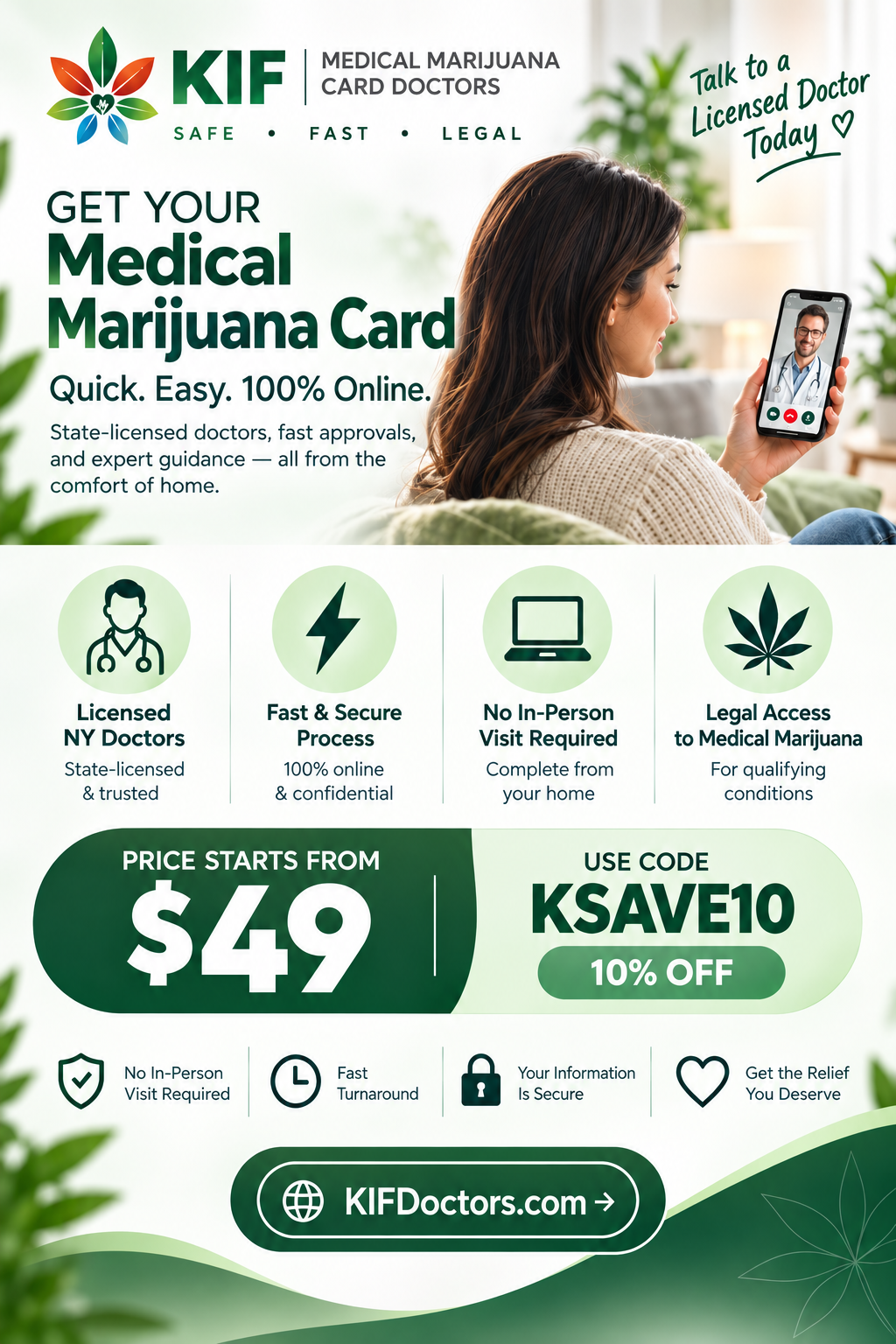
Telehealth has made the process much easier for patients who have mobility limitations, demanding work schedules, or limited access to specialty care. For example, Same Day Medical Marijuana Card Online – Kif Doctors offers licensed physician telehealth evaluations for qualifying patients seeking a fast, secure medical cannabis card process through online scheduling.
Whichever provider you choose, avoid any service that promises approval without a clinical review. A legitimate certification should come from a real practitioner-patient encounter.
What should you expect during the medical marijuana doctor appointment?
A good evaluation feels more like a focused medical conversation than an interrogation. The practitioner is trying to understand whether cannabis is likely to help, whether the benefits outweigh the risks, and what precautions should be considered.
In practice, patients often describe symptoms in broad terms, such as “my back hurts” or “I cannot sleep.” A stronger explanation is more specific: when the pain started, where it is located, what worsens it, what has helped, and how it affects daily life. For sleep, the provider may ask whether the issue is falling asleep, staying asleep, pain-related waking, nightmares, or medication side effects.
The doctor may also ask about prior cannabis use. Be honest. If cannabis previously caused panic, dizziness, racing heart, or excessive sedation, that does not necessarily disqualify you, but it changes the dosing conversation. If you have never used cannabis, the practitioner may recommend a slower start, lower THC exposure, or products with more balanced cannabinoid ratios.
Patients taking sedatives, opioids, blood thinners, seizure medications, psychiatric medications, or multiple prescriptions should be especially careful. Cannabis can intensify drowsiness and may interact with certain drugs. The evaluation is the right time to bring up these concerns, not after a bad reaction.
What documents, costs, and timeline should patients plan for?
The exact documentation depends on the provider and the patient’s medical history. At minimum, be ready with a government-issued ID, accurate contact information, and a clear explanation of the condition or symptoms for which you are seeking certification. If you have medical records, upload or bring them. If you do not, write a concise timeline of your symptoms and past treatments.
New York does not charge the old patient registration fee that many people remember from earlier versions of the program. The main cost is usually the practitioner evaluation. Fees vary by clinic, telehealth platform, and whether the visit includes follow-up support. Dispensary product costs are separate and can vary widely depending on formulation, potency, brand, and dose.
| Item | What to expect |
| Evaluation | Medical review by an authorized practitioner, often available by telehealth |
| State registration | Generally automatic after certification is issued |
| Dispensary access | Certification plus government ID |
| Timing | Often same day after approval, depending on provider workflow |
If your appointment is incomplete because records are missing or the provider needs clarification, approval may take longer. That is not a bad sign; it often reflects careful medical practice.
Where can you buy medical cannabis and how should you choose products?
Certified patients should purchase from licensed New York medical dispensaries. Licensed dispensaries follow state testing, labeling, inventory, and dispensing rules. This is one of the main advantages of the medical program: patients can avoid unregulated products with uncertain potency or contamination risks.
Product choice should be based on the symptom, desired onset time, duration, and personal tolerance. Inhaled products act faster but may not be appropriate for patients with lung disease. Tinctures and capsules take longer to work but may offer steadier relief. Topicals may be useful for localized discomfort, although effects can be limited for deep pain. Edibles can last longer but are easier to overdo because onset is delayed.
A common patient mistake is taking another dose too soon. Oral cannabis may take one to three hours to fully peak, depending on the product and the person’s metabolism. Taking more after 30 minutes can lead to an uncomfortable experience later. A cautious plan is to start low, wait long enough, and adjust gradually with guidance.
Patients should also ask dispensary staff about THC and CBD content, serving size, terpene profile when available, and whether a product is intended for daytime or nighttime use. Labels can be technical, but staff at medical dispensaries are used to helping patients translate the numbers into practical use.
What are the pros and cons of getting a medical cannabis card?
A medical cannabis card can be helpful, but it is not necessary for everyone. The best decision depends on your health goals, budget, location, and need for medical oversight.
- Pros: medical guidance, access to licensed medical dispensaries, documentation of patient status, product support, and recommendations tailored to a health condition.
- Pros: potentially better continuity for people with chronic symptoms who need consistent products and dosing strategies.
- Pros: caregiver options for patients who cannot easily shop or administer products on their own.
- Cons: the evaluation has a cost, and cannabis products are usually paid out of pocket.
- Cons: certification does not override federal law, workplace safety policies, impaired driving laws, or housing rules tied to federal funding.
- Cons: cannabis is not risk-free and may worsen anxiety, dizziness, sedation, or cognitive impairment in some patients.
For many patients, the biggest benefit is not simply legal access. It is having a clinician review the situation and help set boundaries. That is especially valuable for older adults, people taking multiple medications, and anyone with a history of panic attacks or substance use disorder.
How do renewals, caregivers, home cultivation, and safety rules work?
Medical cannabis certifications are not permanent. The practitioner determines the certification period, and patients must renew before expiration to keep buying from medical dispensaries. Put the renewal date on your calendar, especially if you rely on cannabis for persistent symptoms. Waiting until the last day can create gaps in access.
New York also allows designated caregivers for eligible patients. A caregiver can help obtain, transport, and administer medical cannabis for a certified patient. This is useful for minors, older adults, patients with disabilities, and people recovering from serious illness. Caregiver rules have specific registration and identification requirements, so patients should confirm details through state guidance or the certifying provider.
Home cultivation is permitted for certified patients and designated caregivers who meet age and rule requirements, but it comes with limits on plant counts, secure storage, and household totals. Growing at home is not automatically the cheaper or simpler option. It requires privacy, time, proper storage, and attention to safety, especially around children, pets, and visitors.
Safety rules deserve equal attention. Do not drive while impaired. Do not cross state lines with cannabis, even if you are traveling to another state with a medical program. Store products in original packaging and keep them locked away. If you experience chest pain, severe confusion, hallucinations, repeated vomiting, or extreme anxiety after cannabis use, seek medical help.
What questions do patients ask most often?
Is a New York medical marijuana card the same as a certification?
Most of the time, yes. People commonly say medical marijuana card, medical cannabis card, cannabis card, mmj card, or medical card, but New York generally relies on the practitioner certification and registry information rather than mailing a separate plastic card to every patient.
Can I get approved online?
Yes, many patients can complete a telehealth evaluation if the provider is authorized and the visit meets clinical standards. The appointment still needs to be legitimate. You should expect health questions, a review of symptoms, and documentation of the provider’s decision.
Do I need medical records?
Records help, but they are not always required by every provider. If you have them, bring them. If you do not, prepare a detailed symptom history, medication list, and explanation of prior treatments. The clearer your information, the easier it is for the clinician to make a sound decision.
Can I use my New York certification in another state?
Do not assume so. Some states recognize out-of-state patients in limited ways, while others do not. More importantly, transporting cannabis across state lines remains illegal under federal law. Buy and use within the rules of the state you are in.
Will my employer know I have a medical cannabis card?
Your medical information is private, but workplace issues can still arise if you are tested, impaired at work, work in a safety-sensitive role, or fall under federal employment rules. A medical cannabis certification does not give permission to work while impaired.
How much cannabis can a patient buy?
New York medical patients may purchase amounts based on state rules and the practitioner’s certification, commonly framed around a patient supply rather than casual daily purchasing. Dispensaries track purchases through the state system, so ask the dispensary and provider how your limit applies.
Can cannabis replace my current medication?
Not without medical guidance. Some patients reduce reliance on certain medications over time, but stopping prescriptions abruptly can be dangerous. Discuss any medication changes with the prescribing clinician.
Conclusion
Getting approved for a New York medical marijuana card is usually a practical, patient-centered process: confirm that cannabis may be appropriate, meet with an authorized practitioner, receive certification if approved, and purchase only from licensed medical dispensaries. The best outcomes come from honest medical history, cautious dosing, and realistic expectations.
Medical cannabis is not a cure-all, and it is not risk-free. Used thoughtfully, however, it can be a valuable option for patients whose symptoms have not been adequately controlled with conventional approaches alone. If you are unsure whether you qualify, start with a qualified medical marijuana doctor who can review your situation and explain the safest next step.
Sources
- Office of Cannabis Management | Office of Cannabis Management (www.health.ny.gov)
- www.health.ny.gov/forms/doh-5003.pdf (www.health.ny.gov)
Frequently Asked Questions
What conditions qualify for a New York medical marijuana card?
Qualifying conditions include cancer, epilepsy, multiple sclerosis, chronic pain, PTSD, and certain other severe illnesses as defined by New York State law.
How do I apply for a New York medical marijuana card?
To apply, you must first obtain a certification from a registered healthcare provider, then complete the application online through the New York State Department of Health's Medical Marijuana Program.
What documents do I need to apply for the card?
You will need proof of identity, proof of residency in New York, and a medical certification from a qualified healthcare provider.
How long does it take to get approved for a medical marijuana card in New York?
Approval typically takes about 2-4 weeks after submission, depending on the volume of applications being processed.
{“@context”:”https://schema.org”,”@type”:”FAQPage”,”mainEntity”:[{“@type”:”Question”,”name”:”What conditions qualify for a New York medical marijuana card?”,”acceptedAnswer”:{“@type”:”Answer”,”text”:”Qualifying conditions include cancer, epilepsy, multiple sclerosis, chronic pain, PTSD, and certain other severe illnesses as defined by New York State law.”}},{“@type”:”Question”,”name”:”How do I apply for a New York medical marijuana card?”,”acceptedAnswer”:{“@type”:”Answer”,”text”:”To apply, you must first obtain a certification from a registered healthcare provider, then complete the application online through the New York State Department of Health’s Medical Marijuana Program.”}},{“@type”:”Question”,”name”:”What documents do I need to apply for the card?”,”acceptedAnswer”:{“@type”:”Answer”,”text”:”You will need proof of identity, proof of residency in New York, and a medical certification from a qualified healthcare provider.”}},{“@type”:”Question”,”name”:”How long does it take to get approved for a medical marijuana card in New York?”,”acceptedAnswer”:{“@type”:”Answer”,”text”:”Approval typically takes about 2-4 weeks after submission, depending on the volume of applications being processed.”}}]}