
Getting a medical marijuana card in Utica, New York is more straightforward than most people expect. New York State has one of the more inclusive medical cannabis programs in the country, and residents of Utica have access to both in-person and online certification pathways. Whether you are dealing with chronic pain, anxiety, PTSD, or another qualifying condition, understanding the process from start to finish can save you time, money, and a lot of unnecessary stress.
This guide walks you through every step of obtaining your medical marijuana card in Utica, NY, including what conditions qualify, how to find a certified provider, what documents you need, and how to register with the state. By the end, you will know exactly what to do and what to expect along the way.
Understanding New York’s Medical Marijuana Program
New York’s medical cannabis program is overseen by the Office of Cannabis Management (OCM), which took over regulatory responsibilities from the Department of Health. The state has significantly expanded its program in recent years, removing the requirement for a formal registry ID card and streamlining the certification process for patients.
As of recent updates, patients in New York no longer need to carry a physical medical marijuana card. Instead, a certified healthcare provider issues a medical cannabis certification, which is electronically registered with the state. You can access dispensaries using that certification along with a valid photo ID. This shift has made the process faster and less bureaucratic for patients across the state, including those in Utica.
Step 1: Confirm You Have a Qualifying Medical Condition
Before anything else, verify that your health condition qualifies under New York’s medical cannabis program. The state has moved away from a rigid list of qualifying conditions. Instead, certified healthcare providers are given the authority to recommend medical cannabis for any condition they believe would benefit from it, using their professional judgment.
That said, the most commonly certified conditions include:
- Chronic pain
- Post-traumatic stress disorder (PTSD)
- Cancer
- Epilepsy and seizure disorders
- Multiple sclerosis
- Inflammatory bowel disease
- Neuropathy
- Anxiety and depression (at provider discretion)
- Parkinson’s disease
- Opioid use disorder
If you are unsure whether your condition qualifies, the best approach is to schedule a consultation with a certified provider. They will evaluate your medical history and determine whether medical cannabis is an appropriate recommendation for you.
Pro tip: Gather your medical records before your appointment. Having documentation of your diagnosis, treatment history, and any medications you are currently taking will help the provider make a faster and more informed decision.
Step 2: Find a Certified Medical Cannabis Provider in Utica
Not every doctor in New York can certify patients for medical cannabis. Providers must complete a required training course approved by the state before they are authorized to issue certifications. Once trained, they are listed in the state’s registry of certified practitioners.
In Utica, you have a few options for finding a qualified provider:
- Search the New York Office of Cannabis Management’s practitioner registry at cannabis.ny.gov
- Ask your primary care physician if they are certified or if they can refer you to someone who is
- Use a telehealth platform that connects New York patients with certified providers
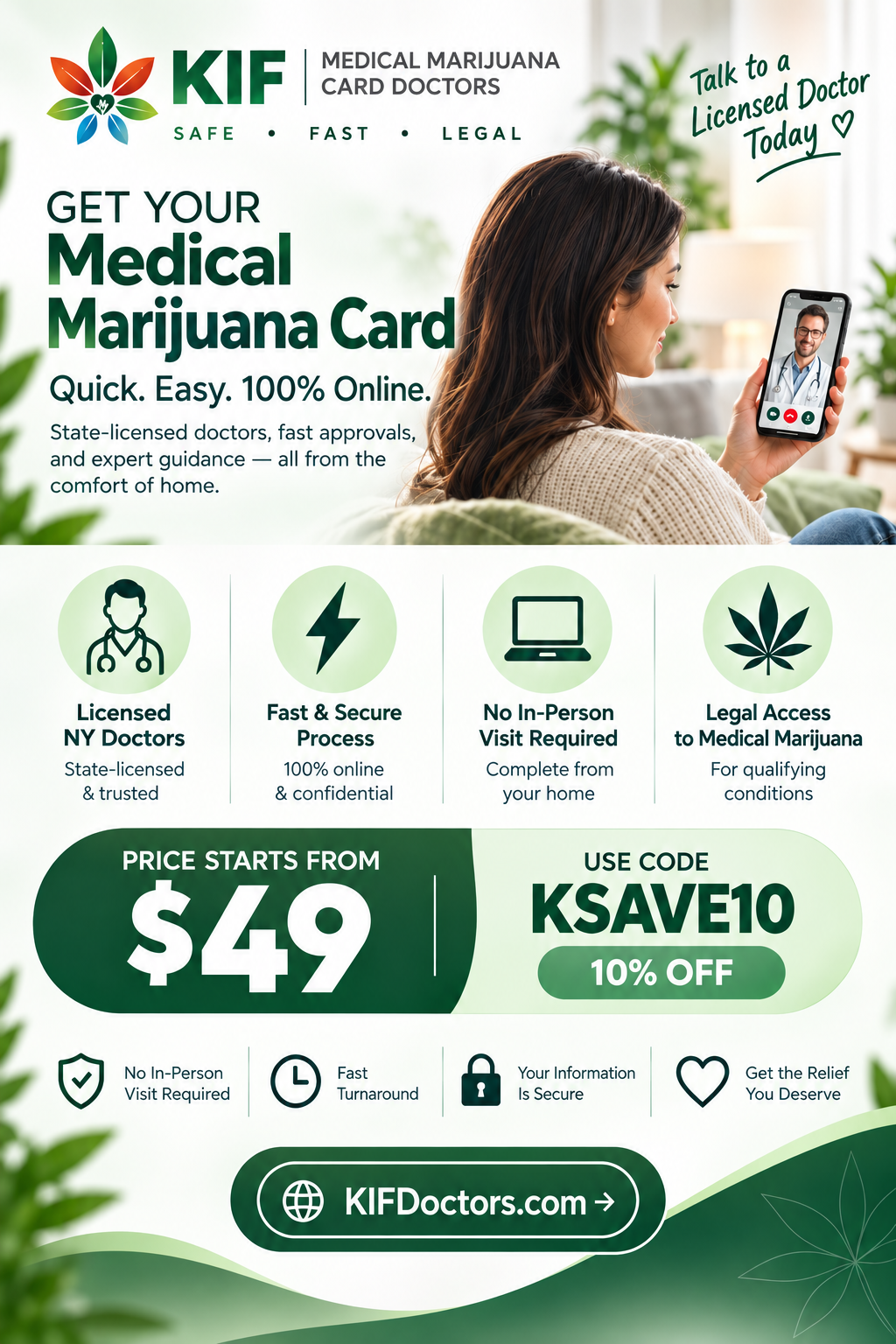
Telehealth has become an incredibly popular option for Utica residents because it eliminates travel time and often allows for same-day appointments. Platforms like Kif Doctors have made the process especially accessible. You can Get Medical Marijuana Card Online Instantly through their service, which connects you with a state-certified provider via a secure video visit from the comfort of your home.
Warning: Be cautious of any service that guarantees approval before you have even had a consultation. Legitimate providers will always conduct a real medical evaluation before issuing a certification.
Step 3: Schedule and Attend Your Certification Appointment
Once you have identified a certified provider, schedule your appointment. If you are going the telehealth route, the process is typically very simple. You will create an account on the platform, select an available time slot, and join the video consultation at your scheduled time.
During the appointment, the provider will:
- Review your medical history and any documentation you provide
- Ask about your symptoms, current treatments, and what you hope to achieve with medical cannabis
- Determine whether medical cannabis is appropriate for your condition
- Discuss potential risks, benefits, and usage guidance
- Issue your certification electronically if you qualify
Most appointments last between 15 and 30 minutes. In-person visits at a local clinic in Utica may take longer due to waiting room times, while telehealth visits tend to move faster.
Practical tip: Be honest during your consultation. Providers are there to help you, not to judge you. Giving an accurate picture of your health history leads to better recommendations and a more useful certification.
Step 4: Receive Your Medical Cannabis Certification
After your appointment, if the provider determines you qualify, they will submit your certification electronically to the New York State cannabis registry. You will typically receive a copy of your certification via email or through the provider’s patient portal.
This certification serves as your proof of eligibility to purchase medical cannabis at licensed dispensaries in New York. It includes your name, the provider’s information, the date of certification, and the duration of validity, which is typically one year.
Keep a digital or printed copy of your certification accessible. Some dispensaries may ask to see it alongside your government-issued photo ID when you visit for the first time.
Step 5: Register with the New York Office of Cannabis Management (Optional but Recommended)
While New York no longer requires patients to register and obtain a physical card, you can still create an account with the Office of Cannabis Management for added convenience. Registration allows you to manage your certification online, renew it when it expires, and access program updates.
To register, visit the official OCM website at cannabis.ny.gov and follow the patient registration instructions. You will need your certification number and some basic personal information.
Registering also makes it easier to prove your status if there is ever a question at a dispensary or in another official context.
Step 6: Visit a Licensed Dispensary in or Near Utica
With your certification in hand, you are ready to visit a licensed medical cannabis dispensary. Utica and the surrounding Mohawk Valley area have dispensary options available, and more have been opening as New York continues to expand its cannabis market.
When you visit a dispensary for the first time, bring:
- Your medical cannabis certification (digital or printed)
- A valid government-issued photo ID such as a driver’s license or passport
Dispensary staff, often called patient care specialists or budtenders, are trained to help you select the right product based on your condition and preferences. Do not hesitate to ask questions about dosage, delivery methods, and product differences.
Available medical cannabis products in New York typically include:
- Tinctures and oils
- Capsules and tablets
- Vaporizable flower and concentrates
- Topicals
- Edibles (now permitted in New York)
Pro tip: Start with a lower dose than you think you need, especially if you are new to cannabis. You can always adjust over time based on how your body responds.
Step 7: Renew Your Certification Before It Expires
Medical cannabis certifications in New York are valid for up to one year. Mark the expiration date on your calendar so you do not accidentally let it lapse. Renewing is generally easier than the initial certification process because your provider already has your medical history on file.
Many telehealth platforms offer streamlined renewal appointments that take less time than the original consultation. If your condition or treatment needs have changed, mention that during your renewal visit so the provider can update your certification accordingly.
Frequently Asked Questions About Medical Marijuana in Utica, NY
Do I need a physical medical marijuana card in Utica, NY?
No. New York State eliminated the requirement for a physical registry ID card. Your electronic medical cannabis certification, paired with a valid photo ID, is all you need to purchase from a licensed dispensary in Utica.
How long does it take to get certified in Utica?
Through a telehealth provider, you can often receive your certification the same day as your appointment. In-person appointments may take a few days depending on the clinic’s schedule and administrative processing time.
How much does a medical marijuana certification cost in Utica?
Costs vary depending on the provider. Telehealth platforms typically charge between $75 and $199 for the initial certification. Some providers offer discounts for veterans, seniors, or patients with financial hardship. New York State does not charge a separate registration fee for patients.
Can my regular doctor certify me for medical cannabis in Utica?
Only if your doctor has completed the required state-approved training course. Many primary care physicians in Utica are not yet certified. If yours is not, you can use a telehealth platform or find a certified specialist through the OCM’s practitioner directory.
Are there dispensaries in Utica, NY?
Yes, Utica and the broader Mohawk Valley region have licensed dispensary options. The number of operating dispensaries in the area continues to grow as New York expands its cannabis licensing program. You can find current dispensary locations through the OCM’s website.
What if I am visiting Utica from another state with a medical marijuana card?
New York does not currently have a reciprocity program for out-of-state medical cannabis patients. If you hold a card from another state, you would need to obtain a New York certification to legally purchase from a dispensary in Utica.
Can minors get a medical marijuana certification in Utica?
Yes, minors can be certified in New York, but the process involves additional steps. A parent or legal guardian must serve as the designated caregiver and handle the purchase and administration of the cannabis products on behalf of the minor.
Is medical cannabis covered by insurance in New York?
No. Medical cannabis is not covered by health insurance, including Medicaid or Medicare, because it remains federally classified as a Schedule I substance. Patients pay out of pocket for both the certification appointment and the cannabis products.
How often do I need to see my certifying provider in Utica?
You are required to renew your certification once a year. However, your provider may recommend follow-up consultations between renewals, especially if you are new to medical cannabis or if your treatment plan needs adjustment.
What happens if I move out of Utica but stay in New York?
Your certification remains valid throughout the state of New York regardless of where you move. You can visit any licensed dispensary in New York with your certification and a valid ID.
Conclusion
Getting a medical marijuana card in Utica, NY is a manageable process when you know the steps involved. From confirming your qualifying condition to visiting a licensed dispensary, each stage is designed to be patient-friendly. The shift to electronic certifications and the availability of telehealth options have made the entire process faster and more accessible than ever before.
If you are ready to move forward, the most practical next step is to schedule a consultation with a certified provider. Whether you choose an in-person clinic in Utica or a telehealth service, having your medical records ready and understanding what to expect will make the experience smooth and straightforward. Once certified, you will have access to a range of medical cannabis products that may offer real relief for your condition.
Official Sources:
- New York Office of Cannabis Management – cannabis.ny.gov
- New York State Department of Health – Medical Marijuana Program