
Sherwood, Arkansas is a growing community just north of Little Rock, and like many cities across the state, its residents are increasingly turning to medical cannabis as a legitimate healthcare option. Whether you are dealing with chronic pain, anxiety, PTSD, or another qualifying condition, Arkansas has a structured medical marijuana program that gives patients legal access to cannabis through licensed dispensaries. Understanding how that process works — from eligibility to card approval — is the first step toward getting the relief you need.
A Quick Look at Arkansas’s Medical Marijuana Program
Arkansas voters approved Amendment 98, also known as the Arkansas Medical Marijuana Amendment, back in 2016. Since then, the state has built out a regulated system that includes licensed dispensaries, cultivation facilities, and a formal patient registry managed by the Arkansas Department of Health (ADH). The program is not open to recreational users — it is strictly medical, which means you need a physician’s certification and a state-issued registry ID card to purchase cannabis legally.
The Arkansas Medical Marijuana Commission oversees licensing for dispensaries and cultivators, while the ADH handles the patient and caregiver registry. This separation of responsibilities keeps the system organized and ensures that patients are properly vetted before gaining access. For Sherwood residents, the good news is that the nearest dispensaries are conveniently located in the greater Little Rock metro area, making access straightforward once you have your card in hand.
Who Qualifies for a Medical Marijuana Card in Arkansas?
To qualify for the Arkansas medical marijuana program, you must be a resident of the state and have a diagnosis of at least one condition from the state’s approved list. The qualifying conditions include:
- Cancer
- Glaucoma
- Positive status for human immunodeficiency virus (HIV) or acquired immune deficiency syndrome (AIDS)
- Hepatitis C
- Amyotrophic lateral sclerosis (ALS)
- Tourette’s syndrome
- Crohn’s disease
- Ulcerative colitis
- Post-traumatic stress disorder (PTSD)
- Severe arthritis
- Fibromyalgia
- Alzheimer’s disease
- Cachexia or wasting syndrome
- Peripheral neuropathy
- Intractable pain — defined as pain that has not responded to ordinary treatments for six months or more
- Severe nausea
- Seizures (including those from epilepsy)
- Severe and persistent muscle spasms
- Any other condition that is chronic or debilitating and approved by the ADH
If you are unsure whether your condition qualifies, a licensed physician can help evaluate your situation. Many conditions that patients assume would not qualify actually do fall under the broader categories, particularly intractable pain and debilitating conditions.
The Step-by-Step Process to Get Your Card
Step 1: Get a Physician Certification
The first and most important step is getting a written certification from a licensed physician who is registered with the Arkansas Department of Health to recommend medical cannabis. This is not a standard prescription — it is a certification confirming that you have a qualifying condition and that medical marijuana may benefit your treatment plan.
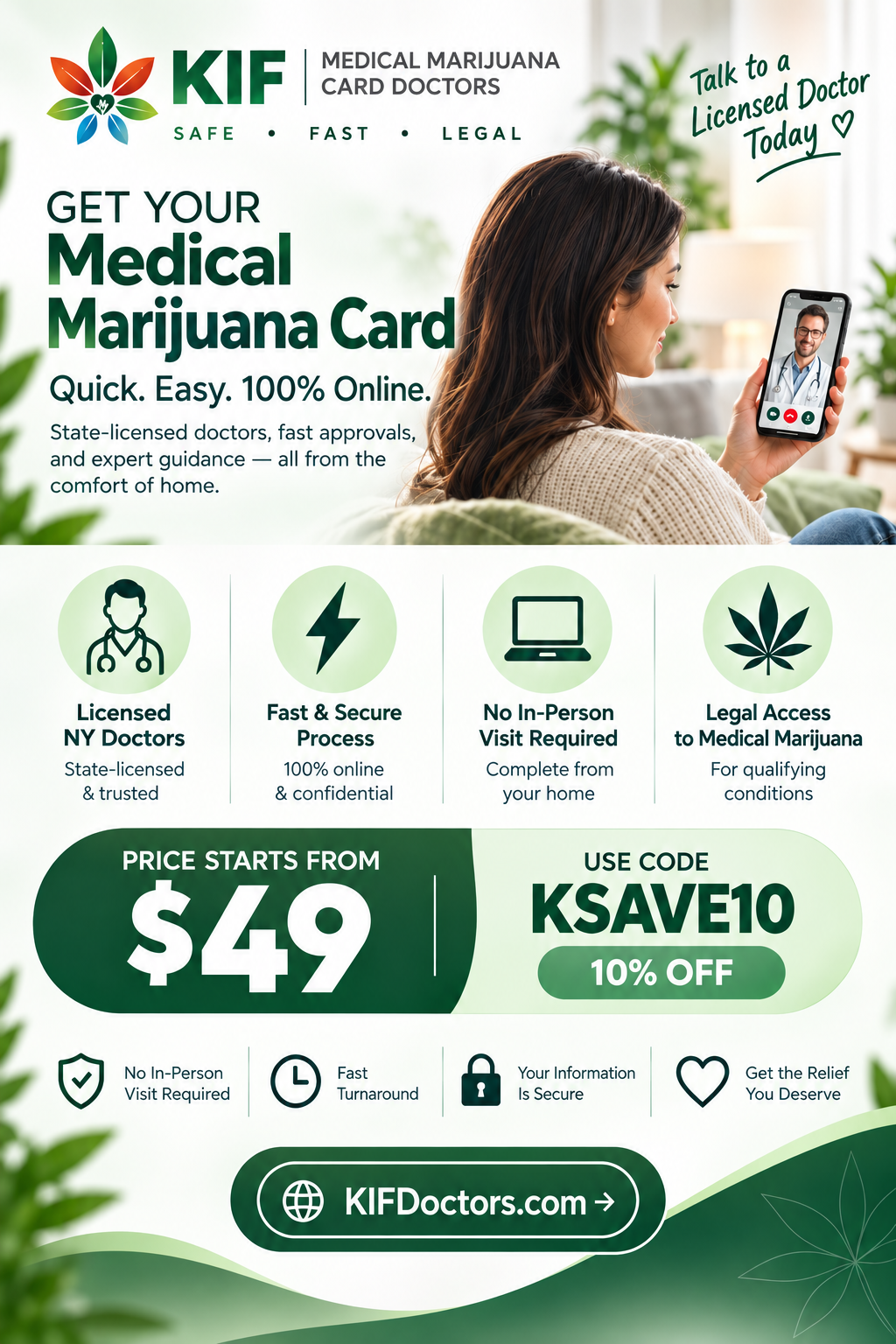
You can visit a doctor in person or, increasingly, take advantage of telemedicine platforms that connect you with a certified physician online. For patients who want a fast, convenient option, I always recommend going for a Medical Marijuana Card. Get Medical Marijuana Card Online Instantly through Kif Doctors, a platform that makes the entire evaluation process simple, same-day, and accessible from home.
Step 2: Create an Account with the Arkansas Department of Health
Once you have your physician’s certification in hand, you will need to register through the ADH’s online patient portal. You can access this at the Arkansas Department of Health’s Medical Marijuana page. The portal allows you to submit your application, upload required documents, and pay the associated fee.
Step 3: Gather Your Documents
Before completing your application, make sure you have the following ready:
- A valid Arkansas state ID or driver’s license
- Proof of Arkansas residency (a utility bill, lease agreement, or similar document)
- Your signed physician certification
- A recent passport-style photo
- Payment for the application fee
Step 4: Submit Your Application and Pay the Fee
The standard patient application fee in Arkansas is $50 for a one-year registry ID card. Reduced fees are available for low-income patients who qualify under the ADH’s guidelines. Once your application is submitted, the ADH reviews it for completeness and accuracy. If everything checks out, your card is typically issued within a few business days, though processing times can vary.
Step 5: Visit a Licensed Dispensary
With your registry ID card approved, you can legally purchase medical cannabis from any licensed dispensary in Arkansas. Sherwood residents have convenient access to dispensaries in the Little Rock area. When you visit, bring your registry card and a valid photo ID. Dispensary staff, often called patient care specialists, can help guide you toward the right products and dosages for your condition.
Renewing Your Medical Marijuana Card
Arkansas medical marijuana registry cards are valid for one year from the date of issuance. To renew, you will need a new physician certification confirming your qualifying condition is still present and that medical cannabis remains appropriate for your care. The renewal process mirrors the initial application — you submit through the ADH portal and pay the renewal fee. It is a good idea to start the renewal process a few weeks before your card expires to avoid any gaps in access.
What You Can and Cannot Do as a Registered Patient
Arkansas law allows registered patients to purchase and possess up to 2.5 ounces of usable cannabis within a 14-day period. You are permitted to consume cannabis in private settings, but public consumption is prohibited. You cannot grow your own cannabis plants at home — home cultivation is not legal under the Arkansas program. Driving under the influence of cannabis is also illegal and treated similarly to driving under the influence of alcohol.
It is also worth noting that while Arkansas has a medical marijuana program, cannabis remains a Schedule I controlled substance under federal law. This means there are certain federal contexts — such as federal employment or federally subsidized housing — where holding a medical marijuana card could create complications. Understanding these boundaries helps patients make informed decisions.
Frequently Asked Questions About Getting a Medical Marijuana Card in Sherwood, AR
Can I use an out-of-state medical marijuana card at Arkansas dispensaries?
No. Arkansas does not currently have a reciprocity program for out-of-state medical marijuana cards. Only Arkansas-registered patients with a valid state-issued registry ID card can purchase cannabis from licensed dispensaries in the state.
How long does it take to get approved after submitting my application?
Processing times vary, but most applications are reviewed within a few business days once all required documents are submitted correctly. Telemedicine options like Kif Doctors can speed up the physician certification step significantly, sometimes allowing same-day evaluations.
Are there dispensaries close to Sherwood, AR?
Yes. Sherwood is located just north of Little Rock, which has several licensed dispensaries within a short drive. The proximity makes it easy for Sherwood residents to access medical cannabis once they have their registry card.
What if my condition is not on the official qualifying conditions list?
Arkansas allows patients with conditions that are chronic or debilitating to apply for consideration even if they are not explicitly listed. The ADH reviews these cases individually. A physician can help you determine whether your condition may qualify under this broader category.
Can a minor get a medical marijuana card in Arkansas?
Yes, but the process is more involved. Minors require two physician certifications and a parent or legal guardian must serve as their designated caregiver. The caregiver is responsible for obtaining and administering the cannabis on behalf of the minor patient.
Is my medical marijuana card information kept confidential?
The Arkansas Department of Health maintains patient registry information as confidential medical records. This information is not publicly accessible, though it may be shared with law enforcement in specific circumstances as outlined by state law.
Can I designate a caregiver to purchase cannabis on my behalf?
Yes. Arkansas allows registered patients to designate a caregiver who can purchase medical cannabis on their behalf. Caregivers must also register with the ADH and meet certain eligibility requirements, including being at least 21 years old.
What forms of cannabis are available at Arkansas dispensaries?
Arkansas dispensaries carry a wide range of products including flower, concentrates, edibles, tinctures, topicals, and capsules. The availability of specific products varies by dispensary, so it is worth checking with your local dispensary or browsing their menu online before visiting.
Do I need to see my regular doctor, or can I see any certified physician?
You can see any physician who is registered with the ADH to provide medical marijuana certifications. This does not have to be your primary care doctor. Many patients choose specialized cannabis clinics or telemedicine services for convenience and speed.
Is there a fee reduction available for low-income patients in Arkansas?
Yes. Arkansas offers a reduced application fee for patients who demonstrate financial need. The ADH provides information on eligibility requirements for the reduced fee on their official website.
Conclusion
Getting a medical marijuana card in Sherwood, AR is a manageable process when you understand the steps involved and know what to expect. Arkansas has built a thoughtful, patient-centered program that balances access with accountability. Whether you choose to visit a physician in person or take advantage of a telemedicine platform for your evaluation, the path to legal medical cannabis access is clear. Taking that first step — getting your physician certification — puts everything else in motion, and from there, the process moves quickly. For anyone living with a qualifying condition in Sherwood, the medical marijuana program is a real, viable option worth exploring.
Official Source Links
- Arkansas Department of Health – Medical Marijuana Program
- Kif Doctors – Same Day Medical Marijuana Card Online