
North Tonawanda residents dealing with chronic pain, anxiety, PTSD, cancer, and dozens of other qualifying conditions now have a legal, structured path to access medical cannabis in New York State. Since New York expanded its medical marijuana program and later legalized adult-use cannabis, the medical card still holds significant advantages — lower taxes, higher possession limits, and access to products specifically formulated for therapeutic use. If you live in North Tonawanda and you’re wondering how to navigate this process, this guide walks you through every step clearly and practically.
Why Getting a Medical Marijuana Card in New York Still Matters
Many people assume that because recreational cannabis is now legal in New York, a medical card is no longer necessary. That thinking misses a few important points. Medical cannabis patients in New York are exempt from the state’s cannabis excise tax, which can add up to a meaningful savings over time. Patients can also possess larger quantities and access a wider range of product formulations, including higher-potency options that aren’t always available on the recreational shelf.
For residents of North Tonawanda, which sits in Niagara County just north of Buffalo, having a medical card also means you’re working within a regulated healthcare framework. Your condition is documented, your treatment is tracked, and you have legal protections that recreational users don’t always enjoy. If you’re using cannabis as part of a broader treatment plan, that medical documentation can matter when speaking with other healthcare providers.
Step 1: Confirm You Have a Qualifying Condition
New York State has one of the more inclusive lists of qualifying conditions in the country. As of the most recent updates from the New York State Office of Cannabis Management (OCM), certified practitioners have broad discretion to recommend medical cannabis for any condition they believe would benefit from it. That said, the most commonly approved conditions include:
- Chronic pain
- Cancer
- HIV/AIDS
- ALS (Amyotrophic Lateral Sclerosis)
- Parkinson’s disease
- Multiple sclerosis
- Epilepsy and seizure disorders
- Inflammatory bowel disease
- Neuropathy
- Post-traumatic stress disorder (PTSD)
- Substance use disorder
- Anxiety disorders
If you’re unsure whether your condition qualifies, the best step is to consult with a certified medical cannabis practitioner. They can review your medical history and determine whether a certification is appropriate for your situation.
Pro tip: Gather any existing medical records, prescription history, or documentation related to your condition before your appointment. It speeds up the evaluation process significantly.
Step 2: Register with the New York State Medical Cannabis Program
Before you can receive a certification, you need to create a patient account through the New York State Health Commerce System or through the OCM’s patient registry. This registration is free and takes only a few minutes. You’ll need a valid New York State ID or driver’s license, your date of birth, and a working email address.
Visit the official New York State Office of Cannabis Management website at cannabis.ny.gov to access the patient registry portal. Once registered, you’ll receive a patient ID number that your certifying practitioner will use to issue your recommendation.
If you run into technical issues during registration, the OCM has a patient support line that can walk you through the process. Don’t skip this step — it’s required before any certification can be issued.
Step 3: Find a Certified Medical Cannabis Practitioner
Not every doctor in New York is authorized to certify patients for medical cannabis. Practitioners must complete a two-hour training course approved by the OCM and register with the state before they can issue certifications. This means you may need to specifically seek out a certified provider rather than relying on your regular physician.
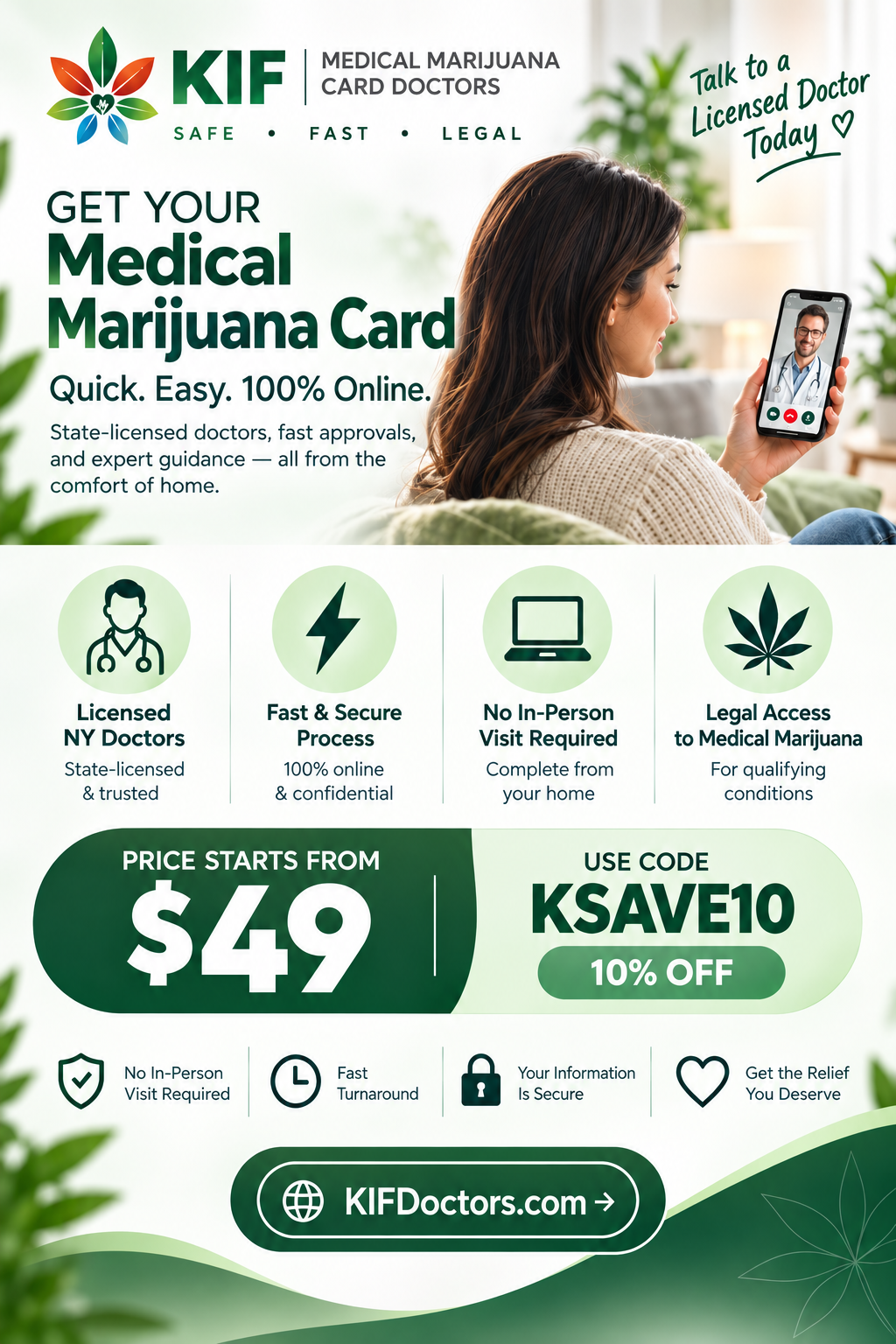
Fortunately, the process has become significantly more accessible through telehealth. You no longer need to travel to a clinic in Buffalo or Rochester. Platforms like Kif Doctors offer same-day online evaluations with New York-licensed practitioners who are certified to issue medical cannabis recommendations. You can Get Medical Marijuana Card Online Instantly through their platform, completing the entire process from the comfort of your home in North Tonawanda.
When choosing a provider, look for the following:
- Confirmation that the practitioner is registered with the NY OCM
- Clear pricing with no hidden fees
- A straightforward intake process
- Same-day or next-day availability
- Patient reviews or testimonials
Step 4: Complete Your Medical Evaluation
Whether you’re meeting with a practitioner in person or via telehealth, the evaluation itself is typically straightforward. The practitioner will review your medical history, ask about your symptoms, discuss your current treatments, and determine whether medical cannabis is an appropriate recommendation for your condition.
Be honest and thorough during this consultation. Mention all relevant symptoms, how long you’ve been dealing with them, what treatments you’ve tried, and what results you’ve had. The more information the practitioner has, the more tailored their recommendation can be.
After the evaluation, if approved, the practitioner will enter your certification directly into the state registry. You don’t receive a physical card in the traditional sense — your certification is stored digitally in the state system, and dispensaries can look it up using your patient ID and date of birth.
Common mistake to avoid: Some patients assume they need a physical card to visit a dispensary. In New York, your digital certification in the state system is sufficient. You can also download or print a certification document for your records.
Step 5: Access Your Certification and Visit a Dispensary
Once your certification is issued, it’s typically valid for one year. You can visit any licensed medical cannabis dispensary in New York State. For North Tonawanda residents, dispensaries in the greater Buffalo and Niagara Falls area are the most convenient options.
When you arrive at a dispensary, bring your New York State ID and your patient registry information. Dispensary staff, often called patient care specialists, are trained to help you select the right products based on your condition and experience level. Don’t hesitate to ask questions — they’re there to help.
Products available to medical patients typically include:
- Tinctures and oils
- Capsules and tablets
- Vaporizable flower and concentrates
- Topicals
- Edibles
Start with lower doses if you’re new to cannabis, regardless of the product type. Effects vary by individual, and it’s always better to start conservatively and adjust based on your response.
Step 6: Renew Your Certification Annually
Medical cannabis certifications in New York are valid for one year from the date of issue. To maintain uninterrupted access, plan to renew your certification before it expires. The renewal process mirrors the initial certification — you’ll need another evaluation with a certified practitioner.
Many telehealth platforms make renewals quick and affordable. Keep track of your expiration date and schedule your renewal appointment a few weeks in advance to avoid any gaps in access.
Frequently Asked Questions About Medical Marijuana in North Tonawanda, NY
Can I use my medical marijuana card at any dispensary in New York, not just ones near North Tonawanda?
Yes. Your New York State medical cannabis certification is valid at any licensed dispensary across the entire state, not just those in Niagara County or the Buffalo area. Whether you’re traveling to New York City, Albany, or anywhere else in the state, you can use your certification at any OCM-licensed location.
How long does it take to get a medical marijuana card in North Tonawanda?
The timeline has shortened dramatically with telehealth options. Through an online platform, you can complete your evaluation and receive your certification the same day in many cases. The state registration step takes just a few minutes, and once the practitioner submits your certification to the registry, it’s typically active within hours.
Is there a dispensary in North Tonawanda specifically?
As of the most recent dispensary listings, North Tonawanda does not have a dedicated medical cannabis dispensary within city limits. However, dispensaries in the greater Buffalo metro area and in Niagara Falls are within reasonable driving distance. The OCM’s website maintains an updated dispensary locator at cannabis.ny.gov.
What is the cost of getting a medical marijuana card in New York?
New York State does not charge a fee for the patient registry itself. The primary cost is the practitioner evaluation, which varies by provider. Telehealth platforms often charge between $99 and $199 for the initial consultation. Some providers offer discounts for veterans, seniors, or patients with financial hardship.
Can minors in North Tonawanda get a medical marijuana card?
Yes, but with additional requirements. Patients under 18 must have a designated caregiver who is at least 21 years old. The caregiver is responsible for obtaining and administering the cannabis on behalf of the minor. Both the patient and caregiver must be registered in the state system.
Does having a medical marijuana card affect my ability to own a firearm in New York?
This is a nuanced legal area. Under federal law, cannabis remains a Schedule I controlled substance, and federal forms for firearm purchases ask about illegal drug use. This creates a conflict between state and federal law that has not been fully resolved. It’s advisable to consult with a legal professional if this is a concern for you.
Can I grow my own cannabis at home in North Tonawanda if I have a medical card?
Under New York’s adult-use cannabis law, adults 21 and older are permitted to grow up to three mature and three immature cannabis plants at home. This right applies to all adults, not exclusively to medical cardholders. However, homegrown cannabis is for personal use only and cannot be sold.
Will my employer in North Tonawanda know I have a medical marijuana card?
No. Your medical cannabis certification is protected health information and is not disclosed to employers. However, workplace drug testing policies vary, and a positive cannabis test could still have employment consequences depending on your employer’s policies and job type. Review your workplace policies carefully.
Can I use my out-of-state medical marijuana card in New York?
New York does not currently have a formal reciprocity agreement with other states for medical cannabis cards. If you’re a visitor, you would need to obtain a New York certification to legally purchase from a dispensary as a medical patient. Adult-use dispensaries are available to anyone 21 and older without a card.
What should I do if my certification is rejected or the practitioner says I don’t qualify?
If one practitioner declines to certify you, you have the right to seek a second opinion from another certified provider. Different practitioners may evaluate the same condition differently. Make sure you’ve provided complete and accurate medical history, and consider bringing additional documentation from your primary care physician or specialist.
Conclusion
Getting a medical marijuana card in North Tonawanda is a manageable, well-defined process when you know the steps. From confirming your qualifying condition and registering with the state, to completing your evaluation and visiting a dispensary, each stage is designed to be accessible. Telehealth has removed most of the geographic barriers that once made this process difficult for residents outside major urban centers. If you’re ready to explore medical cannabis as part of your healthcare, the tools and providers are available to help you move forward today.
Official Sources:
- New York State Office of Cannabis Management – Medical Cannabis Program
- New York State OCM – Dispensary Locator