

Norwalk, California sits in the heart of Los Angeles County, and like the rest of the state, it falls under California’s medical cannabis laws that have been in place since voters passed the Compassionate Use Act back in 1996. If you live in Norwalk and you’re dealing with a chronic condition, persistent pain, or another qualifying health issue, you may be eligible to use medical marijuana as part of your treatment. Getting a medical marijuana card does more than give you legal access to cannabis — it lowers your tax burden, raises your possession limits, and adds a layer of legal protection that recreational users simply don’t have.
This guide walks you through everything you need to know: who qualifies, what the process looks like, how much it costs, what renewal involves, and why a medical card is worth getting even in a state where adult-use cannabis is already legal.
Is Medical Marijuana Legal in Norwalk, CA?
Yes, medical cannabis is fully legal in Norwalk under California state law. That said, Norwalk’s municipal code does not permit cannabis dispensaries to operate within city limits, which means you won’t find a storefront in town where you can pick up your medicine. However, that restriction does not affect your right to obtain a medical marijuana recommendation or card, nor does it prevent you from purchasing cannabis from a licensed dispensary in a neighboring city.
As a Norwalk resident with a valid doctor’s recommendation or a California Medical Marijuana Identification Card (MMIC), you are fully protected under state law to possess, use, and access cannabis through licensed retailers in other parts of Los Angeles County. Many dispensaries also offer delivery services, which makes things more convenient for Norwalk residents.
Why Getting a California Medical Marijuana Card Still Makes Sense
Some people assume that because recreational cannabis is legal in California, there’s no reason to bother with a medical card. That’s a common misconception, and it ends up costing people money. Here’s what a medical card actually does for you that a recreational purchase doesn’t.
First, the tax savings are real and significant. Recreational cannabis buyers pay a combination of state excise, sales, and local taxes that can push the effective tax rate between 27% and 40%, depending on the municipality. Medical marijuana patients with a valid MMIC are exempt from the state sales and use tax, bringing their effective rate down to somewhere between 15% and 20%. If you’re spending even $150 to $200 a month on cannabis, those savings add up to hundreds of dollars over the course of a year — more than enough to offset the cost of the card itself.
Second, possession limits are higher. Under California’s recreational rules, adults can possess up to one ounce (28.5 grams) of flower. Medical patients with an MMIC can legally possess up to eight ounces of dried cannabis, and in some cases, a physician can recommend even higher limits depending on the patient’s condition. That’s a meaningful difference for anyone managing a chronic illness who relies on cannabis consistently.
Third, medical cardholders can access cannabis at age 18, while recreational purchases require you to be 21. For younger adults managing qualifying conditions, this is an important distinction.
Finally, having an MMIC provides stronger legal protection if you’re ever questioned by law enforcement. While a physician’s recommendation is helpful, the state-issued card clearly establishes your status as a qualified patient.
Who Qualifies for a Medical Marijuana Card in California?
California’s qualifying conditions list is broad by design. The state legislature wanted to ensure that patients with serious or debilitating conditions could access medical cannabis without being turned away on technicalities. Under California law, as defined by Senate Bill 420 and managed by the California Department of Public Health (CDPH), you may qualify if you have been diagnosed with any of the following conditions by a licensed physician:
- Cancer
- Anorexia
- AIDS or HIV
- Cachexia (severe weight loss associated with illness)
- Chronic pain
- Spasticity
- Glaucoma
- Arthritis
- Migraine headaches
- Epilepsy and other seizure disorders
- Multiple sclerosis
Beyond these named conditions, California’s law includes an important open-ended provision. Any chronic or persistent medical symptom that either significantly limits a person’s ability to carry out major life activities as defined by the Americans with Disabilities Act — or that, if left untreated, could cause serious harm to the person’s safety or physical or mental health — may also qualify. This means conditions like PTSD, anxiety disorders, Crohn’s disease, fibromyalgia, neuropathy, and others can potentially qualify under this broader standard.
The key is that your condition must be documented by a licensed California physician who believes medical cannabis is an appropriate treatment option for you. The physician doesn’t prescribe cannabis — they issue a recommendation, which is a critical legal distinction.
Basic Eligibility Requirements
To apply for a medical marijuana card in California, you need to meet a few basic criteria:
- You must be a California resident with proof of residency (a utility bill, lease agreement, or similar document works).
- You must be 18 years of age or older. Minors may qualify but require parental or guardian consent and must have an adult caregiver registered alongside them.
- You must have a diagnosis that falls under the qualifying conditions listed above, confirmed by a licensed California physician.
- You must have a valid government-issued photo ID.
Step-by-Step: How to Get Your Medical Marijuana Card in Norwalk, CA
The process is more straightforward than most people expect, especially with telemedicine options now widely available. Here’s how it works from start to finish.
Step 1: Consult with a Licensed Cannabis Physician
Your first step is speaking with a California-licensed physician who can evaluate your condition and determine whether medical cannabis is appropriate. You no longer need to leave your home to do this — telemedicine has made it easy to complete this consultation online.
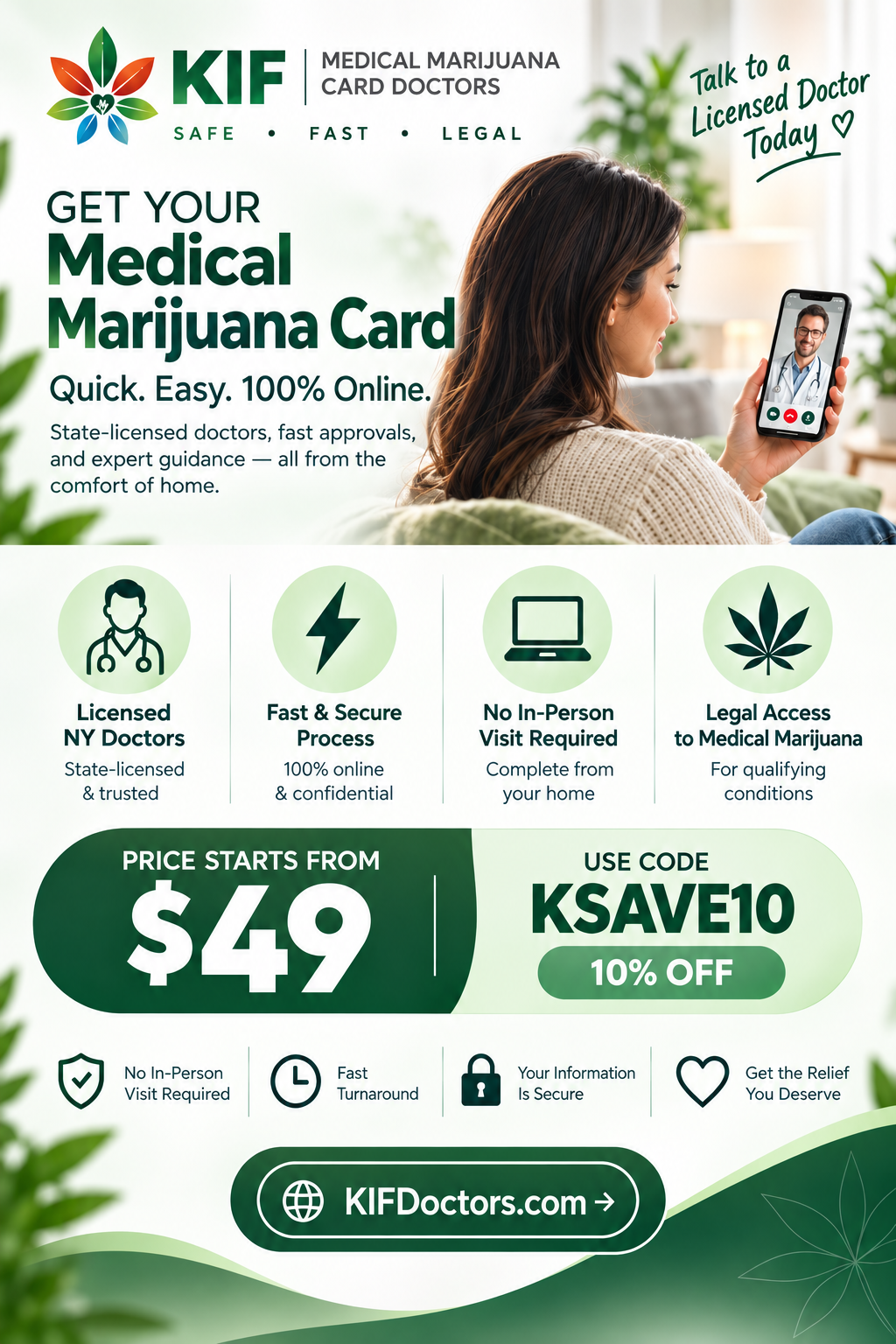
One option that Norwalk patients have used is Kif Doctors, which lets you Get Medical Marijuana Card Online in 10 minutes. The consultation is done through a secure video appointment, and if you qualify, you’ll receive your physician’s recommendation the same day. Kif Doctors charges $45 for the initial medical marijuana card, making it one of the more accessible options for Norwalk residents.
During the consultation, the physician will review your medical history, discuss your symptoms, and determine whether cannabis is a reasonable treatment for your situation. Be honest and thorough — this is a legitimate medical evaluation.
Step 2: Receive Your Physician’s Recommendation
Once the physician approves your use of medical cannabis, they will issue a written recommendation. This document is legally valid in California and allows you to purchase medical cannabis from a licensed dispensary right away. You don’t need the state-issued MMIC to start accessing cannabis — the recommendation alone is sufficient for dispensary purchases.
However, the physician’s recommendation alone does not provide the full tax exemptions or the higher possession limits that come with the state MMIC. If those benefits matter to you (and for most regular users, they do), it’s worth completing the county application as well.
Step 3: Apply for the State MMIC Through Los Angeles County (Optional but Recommended)
To obtain the official California Medical Marijuana Identification Card, you’ll submit an application through the Los Angeles County Department of Public Health. This step gives you the tax exemptions and full legal protections described earlier.
You’ll need to bring:
- Your completed CDPH 9042 application form
- Your physician’s recommendation (the CDPH 9044 form or an official letter)
- A valid government-issued photo ID
- Proof of California residency
- Payment for the application fee (up to $100 in LA County; Medi-Cal recipients receive a 50% reduction)
You submit this application in person at the county health department office. Once processed, you’ll receive your MMIC, which is valid for one year.
How Much Does a Medical Marijuana Card Cost in Norwalk?
The total cost has two components: the physician’s consultation fee and the county application fee.
For the physician’s recommendation, providers like Kif Doctors charge $45 for the initial evaluation. The county MMIC application fee in Los Angeles County is up to $100, though Medi-Cal recipients pay half that amount, and patients in the County Medical Services Program may have the fee waived entirely.
Altogether, most Norwalk residents can expect to spend between $45 and $145 to get fully set up with both a physician’s recommendation and the state-issued card. When you factor in the ongoing tax savings on dispensary purchases, that cost typically pays for itself within a month or two for regular cannabis users.
How to Renew Your Medical Marijuana Card in California
A California MMIC is valid for one year from the date of issue. Renewal requires the same basic steps as the initial application — you’ll need a current physician’s recommendation and a resubmission of your county application with updated documents.
It’s a good idea to start the renewal process a few weeks before your card expires to avoid any gap in coverage. With telemedicine services, the physician consultation portion can typically be completed in a day. Kif Doctors charges $35 for the renewal consultation, which is lower than the initial fee.
If your qualifying condition is chronic or ongoing, renewal is generally straightforward — you don’t need to re-establish your diagnosis from scratch. Your physician simply needs to confirm that medical cannabis remains an appropriate treatment for your condition.
Using Your Medical Marijuana Card in Norwalk
Since cannabis dispensaries are not permitted within Norwalk city limits, you’ll be visiting dispensaries in neighboring cities like Downey, Compton, or other areas of Los Angeles County where dispensaries are licensed and operational. Many of these dispensaries serve medical patients directly and offer products specifically suited for medical use, including high-CBD options, tinctures, edibles, topicals, and other formulations that recreational users may have fewer choices among.
When visiting a dispensary as a medical patient, bring both your physician’s recommendation and your MMIC if you have one. Show both at the door and at the point of purchase. Dispensary staff are used to working with medical patients and can often point you toward products tailored to specific conditions.
Many dispensaries also offer home delivery, which is a practical option for Norwalk residents who don’t want to travel. Delivery services are required to follow the same legal protocols as in-store sales, so your medical status is recognized and your tax exemptions apply.
Privacy and Legal Protections
One concern some patients raise is whether obtaining a medical marijuana card affects their privacy. California’s MMICP database is confidential and is used only to verify patient status for law enforcement purposes. Your medical information is not shared with employers, federal agencies, or insurance companies as part of this program.
It’s worth noting that cannabis remains a Schedule I controlled substance under federal law, regardless of state protections. Federal employees or those who work in federally regulated industries (aviation, certain transportation roles, federal contractors) should be aware that a California medical card does not protect them in federal employment contexts.
Conclusion
Getting a medical marijuana card in Norwalk, CA is a sensible step if you’re managing a qualifying condition and using cannabis as part of your treatment. The process has become significantly easier with telemedicine options, and the financial and legal benefits are real. Lower taxes, higher possession limits, stronger legal standing, and access to a wider range of medical-focused products are all tangible advantages over buying recreationally.
If you’re ready to move forward, start with a physician’s consultation. Services like Kif Doctors make it fast and accessible — you can complete the evaluation from home and have your recommendation the same day. From there, the county application for your MMIC is the final step to getting the full benefits California’s medical cannabis program has to offer.
Your health conditions are real, your need for relief is real, and California’s medical cannabis program was built to serve patients exactly like you.
Frequently Asked Questions About Getting a Medical Marijuana Card in Norwalk, CA
Can I get a medical marijuana card online if I live in Norwalk, CA?
Yes. California allows telemedicine consultations for medical cannabis evaluations, so you can complete the physician’s portion of the process entirely online. Providers like Kif Doctors offer secure video appointments with licensed California physicians, and if you qualify, you’ll receive your recommendation the same day. The county MMIC application still needs to be submitted in person through the Los Angeles County Department of Public Health, but the doctor’s step requires no in-person visit.
Does Norwalk have dispensaries where I can use my medical marijuana card?
No, Norwalk’s municipal code prohibits cannabis dispensaries from operating within city limits. However, your California medical card is valid at any licensed dispensary in the state. Norwalk residents typically visit dispensaries in nearby cities such as Downey, Compton, or other LA County communities where dispensaries are authorized. Many dispensaries in the greater Los Angeles area also offer delivery services to Norwalk addresses.
What are the qualifying conditions for a medical marijuana card in California?
California recognizes 11 named qualifying conditions: cancer, anorexia, AIDS/HIV, cachexia, chronic pain, spasticity, glaucoma, arthritis, migraines, epilepsy, and multiple sclerosis. Beyond these, any chronic or persistent condition that significantly limits a person’s ability to conduct major life activities, or that could cause serious harm to physical or mental health if untreated, may also qualify. Conditions like PTSD, Crohn’s disease, fibromyalgia, and severe anxiety have qualified patients under this broader provision. Your physician determines whether your specific situation meets the criteria.
How long does it take to get a medical marijuana card in Norwalk?
The physician’s recommendation can be issued on the same day as your consultation, particularly with telemedicine services. The county MMIC process through Los Angeles County takes additional time depending on scheduling and processing — typically a few weeks for the physical card to be issued. In the meantime, your physician’s recommendation is legally valid for dispensary purchases in California, so you’re not waiting idle.
How much does a medical marijuana card cost in Norwalk, CA?
The physician’s consultation fee varies by provider. Kif Doctors charges $45 for the initial evaluation and recommendation. The county MMIC application fee through Los Angeles County is up to $100, with a 50% reduction for Medi-Cal recipients and a potential full waiver for qualifying low-income patients. Altogether, most patients spend between $45 and $145 for their initial card, with annual renewal running lower than the initial cost.
How do I renew my medical marijuana card in California?
California MMICs are valid for one year. To renew, you need a new physician’s recommendation confirming that medical cannabis continues to be appropriate for your condition, followed by a resubmission of your county application. The process mirrors the initial application but is generally quicker since your medical history is already established. Renewal consultations through Kif Doctors cost $35. It’s best to start the renewal process at least two to three weeks before your current card expires.
Do I save money on taxes with a California medical marijuana card?
Yes, and the savings are significant. Recreational cannabis buyers in California pay a combination of taxes that can total between 27% and 40% depending on the city. Medical patients who hold a valid MMIC are exempt from the state sales and use tax, reducing their effective tax rate to roughly 15% to 20%. For someone spending $200 a month on cannabis, the annual tax savings can easily exceed $500 — well more than the cost of the card itself.
Can a minor get a medical marijuana card in Norwalk, CA?
Yes, in limited circumstances. A minor under 18 with a qualifying diagnosis — such as cancer, epilepsy, or autism — can receive a California medical marijuana recommendation with parental or legal guardian consent. The parent or guardian must also be registered as a primary caregiver. Minors who have been legally emancipated can apply on their own. The recommendation process still requires a physician’s evaluation, and all purchases and use must occur under caregiver supervision.
What is the difference between a physician’s recommendation and the state MMIC?
A physician’s recommendation is a document from a licensed California doctor stating that medical cannabis is appropriate for your condition. It’s legally valid for dispensary access and provides basic patient protections. The California MMIC is the state-issued identification card obtained through your county health department. The MMIC gives you the full tax exemptions, higher possession limits (up to eight ounces versus one ounce for recreational users), and stronger legal protection than the recommendation alone. Most regular cannabis users benefit from obtaining both.
Will getting a medical marijuana card affect my privacy or employment?
California’s MMICP database is confidential and used only to verify patient status for law enforcement. Your information is not shared with employers, insurance providers, or federal agencies through this program. However, cannabis is still illegal under federal law. If you work in a federally regulated field — such as aviation, certain transportation industries, or with a federal contractor — a state medical card does not protect you from federal employment drug testing. For most California residents in private-sector jobs, the card does not create employment risks beyond what already exists under your employer’s own drug policies.
Sources
- California Department of Public Health — Medical Marijuana Identification Card Program FAQs
- California Senate Bill 420 — Medical Marijuana Program Act
- California Department of Public Health — MMICP Program Overview
- California Department of Cannabis Control — What’s Legal
- California Health and Human Services Agency