New Jersey adults can buy recreational cannabis, yet a medical marijuana card still solves problems that adult-use shopping often does not: higher possession limits, patient-focused guidance, tax advantages, and access for patients who need cannabis as part of a health plan rather than an occasional purchase. For many people, the confusing part is not whether medical cannabis may help. It is figuring out how to get approved without wasting time, paying unnecessary fees, or submitting the wrong paperwork.
The good news is that New Jersey has a fairly direct process. If you have a qualifying medical condition and a licensed medical marijuana doctor certifies you, you can register with the state and receive a medical cannabis card. The key is understanding what approval actually means, what a physician is evaluating, and how to avoid the small errors that delay applications.
This guide explains the practical path to getting a New Jersey medical marijuana card, from eligibility and telehealth visits to state registration, renewals, and common mistakes. It is written for patients who want clear answers before they schedule an appointment.
Why a Medical Card Still Matters in New Jersey
Because adult-use cannabis is legal in New Jersey, some patients assume a medical card is no longer worth the effort. In practice, that is not always true. Recreational cannabis is designed for adult consumers. Medical cannabis is designed for patients who are using cannabis to manage symptoms connected to a diagnosed health condition.
A medical marijuana card can make a meaningful difference if you use cannabis regularly, need consistent product access, or benefit from clinician oversight. Patients may also find that medical dispensary staff are better prepared to discuss cannabinoid ratios, dosage forms, onset time, and symptom-specific product selection.
Medical patients in New Jersey also have legal recognition within the state’s Medicinal Cannabis Program, which is overseen by the New Jersey Cannabis Regulatory Commission. That does not mean a cannabis card gives unlimited protection in every situation. Employers, federal property rules, driving laws, and housing policies may still matter. But it does place your cannabis use in a documented medical framework.
For patients dealing with chronic pain, anxiety, PTSD, cancer-related symptoms, inflammatory bowel disease, or other qualifying conditions, that structure can be reassuring. It gives you a documented relationship with a certifying clinician and a clearer pathway for purchasing from licensed medical dispensaries.
The Core Problem: Approval Feels Simple, but the Details Cause Delays
Most denials or delays are not dramatic. They usually come from preventable issues: a mismatched address, an expired ID, missing proof of residency, choosing a doctor who is not properly licensed, or misunderstanding what the state requires after the physician visit.
In everyday patient conversations, the same pattern comes up often. Someone schedules a quick evaluation, gets verbally told they qualify, and then assumes the card will automatically arrive. But approval usually involves two parts. First, a licensed clinician must evaluate and certify you. Second, you must complete the state registration step and follow the instructions exactly.
That distinction matters. A doctor’s certification is not the same as having your physical or digital medical card ready to use. The certification opens the door; state registration completes the process.
New Jersey has made the system more accessible, especially with telehealth options. Still, patients should prepare for the appointment as they would for any legitimate medical evaluation. That means having a diagnosis history, medication list, symptom description, and realistic goals for treatment.
Who Qualifies for a New Jersey Medical Marijuana Card?
To qualify, you generally need to be a New Jersey resident, have a qualifying medical condition, and be evaluated by a licensed healthcare professional who can certify patients for the state program. The official list of qualifying conditions is maintained by the state and can be reviewed on the New Jersey qualifying conditions page.
Common qualifying conditions include, but are not limited to:
- Chronic pain related to musculoskeletal disorders or other diagnosed causes
- Anxiety disorders
- Post-traumatic stress disorder
- Cancer and cancer-related symptoms
- Multiple sclerosis
- Seizure disorders, including epilepsy
- Glaucoma
- Inflammatory bowel disease, including Crohn’s disease
- HIV/AIDS
- Terminal illness with a prognosis that meets state criteria
- Migraine
- Opioid use disorder when connected to medication-assisted treatment
The list can change, and the details matter. For example, occasional back soreness is not the same as documented chronic pain. Feeling stressed is not necessarily the same as a diagnosed anxiety disorder. A medical marijuana doctor is looking for a real clinical basis for certification.
You do not always need a thick folder of records, but documentation helps. Helpful records may include diagnosis notes, prescription history, imaging reports, discharge summaries, specialist letters, therapy records, or a medication list. If you do not have records handy, be prepared to clearly explain your condition, how long you have had symptoms, what treatments you have tried, and why you are seeking cannabis as an option.
Step-by-Step: How to Get Approved
The approval process is easier when you treat it like a checklist instead of a guessing game. Here is the usual sequence for obtaining a medical marijuana card in New Jersey.
- Confirm that you are a New Jersey resident. You will need identification and proof of residency that match state requirements.
- Review the qualifying conditions. Make sure your condition is recognized under the state program or can be reasonably evaluated by a licensed clinician.
- Schedule an appointment with a licensed medical marijuana doctor. This may be in person or through telehealth, depending on the provider.
- Prepare for the evaluation. Gather medical history, current medications, previous treatments, and your questions about cannabis use.
- Complete the physician evaluation. The clinician will discuss your condition, symptoms, risks, benefits, and whether medical cannabis is appropriate.
- Receive certification if approved. The doctor submits or provides the certification information needed for registration.
- Register with the state program. Follow the state’s instructions, upload documents, and pay any required fee if applicable.
- Wait for approval and card access. Once processed, you can use your medical cannabis card according to program rules.
The physician visit is usually the most important step. A legitimate evaluation is not just a yes-or-no formality. The doctor should ask about your health history, current medications, cannabis experience, mental health background, and safety concerns. If you are taking sedatives, have a history of psychosis, are pregnant, or have significant heart or lung concerns, the conversation should be more careful and individualized.
Real-world example: A patient with long-standing nerve pain after a back injury may qualify, but the strongest application is not simply “my back hurts.” It is a clear history: diagnosis, duration, failed treatments, current limitations, and why cannabis may be considered as part of a broader pain-management plan.
Choosing a Medical Marijuana Doctor Without Guesswork
Not every cannabis appointment is equal. Patients should look for a licensed clinician who understands both New Jersey requirements and the practical medical issues involved in cannabis care. The goal is not just to get a card. The goal is to use cannabis more safely and effectively if it is appropriate for your condition.
A good medical marijuana doctor should be able to explain the difference between THC and CBD, discuss possible side effects, and recommend a cautious starting approach. They should also make it clear that cannabis is not a cure-all. It may help with certain symptoms, but results vary by condition, dose, product type, and individual tolerance.
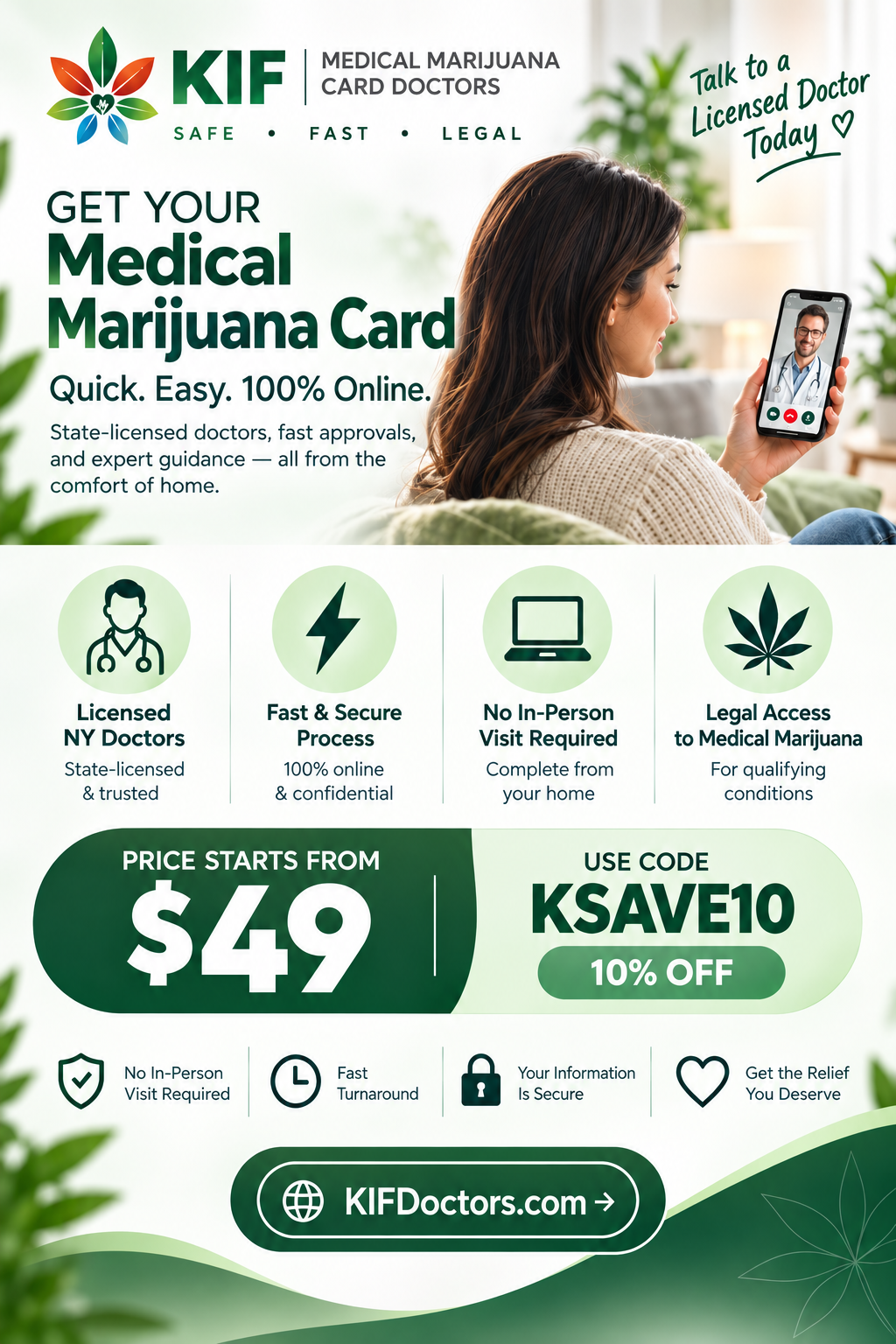
Telehealth has made access easier for many patients, especially those with mobility problems, anxiety, transportation barriers, or busy work schedules. One telehealth option is Same Day Medical Marijuana Card Online – Kif Doctors, where licensed physicians provide same-day evaluations for qualifying conditions.
Before booking, check that the provider serves New Jersey patients and gives clear instructions for the state registration step. Be cautious with any service that promises approval without a medical evaluation or avoids discussing your health history. Fast can be convenient. It should still be legitimate.
What to Have Ready Before Your Appointment
Being prepared can shorten the process and improve the quality of the visit. You do not need to overcomplicate it, but you should approach the evaluation with enough information for the clinician to make a responsible decision.
Have these items ready:
- A valid government-issued photo ID
- Proof of New Jersey residency, if your ID does not clearly establish it
- A list of your diagnoses and symptoms
- Current medications and supplements
- Records showing prior treatment, if available
- Names of specialists or primary care providers involved in your care
- Questions about product types, dosing, side effects, and safety
During the appointment, be honest about cannabis use. If you have used cannabis before, say what worked, what did not, and whether you experienced side effects such as anxiety, dizziness, dry mouth, increased heart rate, or excessive sedation. If you have never used cannabis, say that too. New patients often benefit from lower starting doses and slower adjustments.
It is also wise to discuss your daily routine. A person who drives for work, operates machinery, cares for young children, or takes sedating medication may need more conservative guidance. Medical cannabis can impair reaction time and judgment, especially products high in THC.
State Registration, Fees, and Timing
After certification, you will typically complete your patient registration through the state system. This step confirms your identity, residency, and eligibility. Requirements can change, so follow the instructions provided by the state and your certifying clinician.
Patients often ask how long the process takes. The physician evaluation may be completed quickly, sometimes the same day. State processing can vary depending on document accuracy, volume, and whether anything needs correction. If you upload the wrong file or your name does not match across documents, expect delays.
Costs may include the physician evaluation fee and any state-related fees. The exact amount depends on the provider and current state rules. Some patients may qualify for reduced fees or special considerations, particularly if they participate in certain assistance programs. Always verify current pricing before paying.
Once approved, your medical card is not a blank check. You must follow possession limits, purchase from licensed dispensaries, and avoid driving while impaired. Cannabis remains illegal under federal law, which can affect federal employment, immigration matters, firearm ownership questions, and use on federal property. If any of those issues apply to you, speak with an appropriate professional before relying on general information.
Medical Cannabis Product Choices: What Approval Does Not Teach You
Getting the medical cannabis card is only the beginning. Many patients feel overwhelmed at the dispensary because product menus can be full of unfamiliar terms. Flower, vape cartridges, tinctures, capsules, lozenges, topicals, and edibles may all behave differently in the body.
Inhaled cannabis usually works faster but has a shorter duration. Edibles and capsules take longer to begin working and can feel stronger or last much longer than expected. Tinctures may offer a middle ground, depending on how they are used. Topicals may help localized discomfort for some patients without producing the same whole-body effects.
THC is the main intoxicating cannabinoid. CBD is non-intoxicating and may be useful for some patients, although it can still interact with medications. Terpenes and minor cannabinoids may influence effects, but marketing claims often move faster than strong clinical evidence. That is why it is better to start with conservative dosing and track your response.
| Patient goal | Common consideration |
| Fast symptom relief | Inhaled options may act faster but can irritate lungs |
| Longer-lasting relief | Edibles or capsules may last longer but require careful dosing |
| Avoiding intoxication | CBD-dominant or balanced products may be discussed |
| Localized discomfort | Topicals may be considered, depending on symptoms |
Keep a simple journal during the first few weeks. Note the product, dose, time used, symptom response, side effects, and duration. This gives your clinician and dispensary pharmacist better information than memory alone.
Common Mistakes to Avoid
Small mistakes can slow approval or lead to poor cannabis experiences after you receive your mmj card. Avoid these common problems:
- Assuming recreational access is the same as medical care. A cannabis card connects your use to a qualifying condition and clinician certification.
- Waiting until the appointment to look for records. Even basic documentation can make the evaluation smoother.
- Using different names or addresses on documents. Mismatches are a common reason for registration delays.
- Choosing a provider based only on the lowest price. You want a licensed clinician who follows New Jersey rules and answers medical questions.
- Taking too much THC too soon. Overconsumption can cause anxiety, dizziness, nausea, or an unpleasant experience.
- Driving after use. A medical card does not protect impaired driving.
- Forgetting renewal deadlines. Letting certification lapse can interrupt access.
- Ignoring workplace rules. Some jobs have strict drug policies, especially safety-sensitive positions.
Another mistake is treating cannabis as separate from the rest of your healthcare. If cannabis changes your sleep, mood, appetite, pain level, or medication use, your clinician should know. This is especially important for patients with complex conditions or multiple prescriptions.
Renewing Your New Jersey Medical Cannabis Card
Your medical cannabis card and physician certification are not permanent. You will need to renew according to New Jersey program rules and your certification period. The best approach is to mark renewal dates as soon as you are approved.
Renewal is usually simpler than the first application if your information is current and your condition remains qualifying. Still, the doctor may reassess your symptoms, side effects, product use, and whether cannabis continues to be appropriate. This is a useful checkpoint, not just a bureaucratic step.
Before renewal, ask yourself a few practical questions. Are you using less of other symptom-relief medications, or more? Are you functioning better? Are side effects manageable? Are you using cannabis more often than intended? Honest answers help keep treatment responsible.
If your condition has changed, your medications have changed, or you developed new symptoms, bring that up during the renewal visit. Medical cannabis decisions should evolve with your health, not run on autopilot.
FAQs About Getting a New Jersey Medical Marijuana Card
Can I get a New Jersey medical marijuana card online?
Yes, many patients can complete the physician evaluation through telehealth if the provider is licensed and able to certify New Jersey patients. You still need to complete the required state registration steps after certification.
Do I need medical records to get approved?
Medical records are helpful, but the exact need depends on your condition and the clinician’s evaluation. Bring anything that supports your diagnosis, such as prior prescriptions, imaging results, specialist notes, or treatment history.
How long does approval take?
The doctor evaluation may be completed quickly, but state processing time can vary. Accurate documents and matching personal information help prevent delays.
Can I use my medical card in other states?
Some states recognize out-of-state medical cannabis patients, but rules vary widely. Do not assume your New Jersey medical card works elsewhere. Check the destination state’s official program rules before traveling.
Conclusion
Getting approved for a New Jersey medical marijuana card is manageable when you understand the process: confirm eligibility, meet with a licensed medical marijuana doctor, complete state registration, and use cannabis responsibly within program rules. The card can be valuable even in a state with adult-use cannabis because it supports patient-focused access, documentation, and guidance.
The best results come from preparation and honesty. Know your condition, gather useful records, ask practical questions, and treat medical cannabis like any other therapy that deserves careful dosing and follow-up. A medical card can open the door, but thoughtful use is what makes the treatment safer and more effective.
Frequently Asked Questions
What conditions qualify for a New Jersey medical marijuana card?
In New Jersey, qualifying conditions include chronic pain, anxiety, PTSD, cancer, and more. A complete list can be found on the state's health department website.
How do I apply for a New Jersey medical marijuana card?
To apply, you need to obtain a recommendation from a licensed physician, complete the application online, and provide necessary documentation and fees.
How long does it take to receive my medical marijuana card?
Typically, it takes about 30 days to process your application and receive your card, although times may vary depending on the volume of applications.
Can I use my New Jersey medical marijuana card in other states?
Some states have reciprocity agreements, but most do not recognize out-of-state medical marijuana cards. Always check the specific laws of the state you are visiting.
{“@context”:”https://schema.org”,”@type”:”FAQPage”,”mainEntity”:[{“@type”:”Question”,”name”:”What conditions qualify for a New Jersey medical marijuana card?”,”acceptedAnswer”:{“@type”:”Answer”,”text”:”In New Jersey, qualifying conditions include chronic pain, anxiety, PTSD, cancer, and more. A complete list can be found on the state’s health department website.”}},{“@type”:”Question”,”name”:”How do I apply for a New Jersey medical marijuana card?”,”acceptedAnswer”:{“@type”:”Answer”,”text”:”To apply, you need to obtain a recommendation from a licensed physician, complete the application online, and provide necessary documentation and fees.”}},{“@type”:”Question”,”name”:”How long does it take to receive my medical marijuana card?”,”acceptedAnswer”:{“@type”:”Answer”,”text”:”Typically, it takes about 30 days to process your application and receive your card, although times may vary depending on the volume of applications.”}},{“@type”:”Question”,”name”:”Can I use my New Jersey medical marijuana card in other states?”,”acceptedAnswer”:{“@type”:”Answer”,”text”:”Some states have reciprocity agreements, but most do not recognize out-of-state medical marijuana cards. Always check the specific laws of the state you are visiting.”}}]}