A patient recently described the process this way: the hardest part was not talking to a clinician, but figuring out which rules were still true. That is a common experience in New York. The state’s medical cannabis program has changed significantly, and many people still search for a medical marijuana card even though the practical document is now a medical cannabis certification with a registry ID.
The short answer is straightforward: to get approved in New York, you need to meet with a New York-authorized medical cannabis practitioner, discuss whether cannabis may help your condition or symptoms, receive a certification if the practitioner agrees, and use that certification with government-issued identification at a licensed medical dispensary. In many cases, the evaluation can be done by telehealth. Approval is not automatic, but the process is more flexible than it used to be.
This guide explains how approval works, what a medical marijuana doctor is looking for, what documents help, what happens after certification, and what to watch for before you spend money. It is written for patients who want a clear, practical path rather than vague promises.
What approval really means in New York’s medical cannabis program
In New York, the phrase medical marijuana card is still widely used because patients, clinics, and search engines have used it for years. In practice, the state no longer revolves around a plastic card in the old sense. A certified patient receives a medical cannabis certification that includes a registry ID. That certification, together with a valid government-issued photo ID, is what allows purchase from a registered medical dispensary.
The most important change is that New York no longer limits certification to a narrow, fixed list of qualifying conditions. Instead, a practitioner may certify a patient when, in the practitioner’s professional judgment, the patient has a condition that may benefit from medical cannabis. This does not mean anyone can get approved without a legitimate medical reason. It means the conversation is more individualized and clinically focused.
For example, two patients with the same diagnosis may have different outcomes. One person with chronic back pain may have tried physical therapy, anti-inflammatory medicines, injections, and lifestyle changes with limited relief. Another may have mild, occasional pain that responds well to over-the-counter care. A medical marijuana doctor will usually focus on severity, duration, previous treatments, medication risks, sleep impact, daily functioning, and whether cannabis is a reasonable option.
The state’s approach reflects a broader shift in healthcare: instead of treating cannabis as a last-resort option for only a few diagnoses, clinicians can evaluate whether it fits the patient’s overall medical picture. That flexibility can help people with chronic pain, neuropathy, cancer-related symptoms, PTSD symptoms, inflammatory conditions, seizure disorders, severe nausea, appetite loss, and other conditions. Still, the practitioner must use medical judgment, and patients should be honest about symptoms, current medications, substance use history, pregnancy status, psychiatric history, and safety-sensitive work.
For official program details, the New York Office of Cannabis Management medical cannabis guidance is the best place to confirm patient rules, caregiver information, and dispensary requirements.
The approval pathway, step by step
The approval process is easier when you know what each step is designed to accomplish. The goal is not simply to obtain a cannabis card. The goal is to document that cannabis is being recommended through a legitimate patient-practitioner relationship and that the patient understands how to use it responsibly.
- Check whether your symptoms may reasonably fit medical cannabis treatment. New York’s flexible standard means you do not need to force your condition into an outdated list. Think in practical terms: What symptoms are you trying to manage? Pain, spasms, insomnia related to a condition, nausea, anxiety associated with trauma, appetite loss, or neuropathic discomfort may be discussed. Approval depends on the clinician’s assessment, not on a self-diagnosis alone.
- Gather helpful medical information. You do not always need a thick file, but documentation helps. Useful records may include diagnosis notes, medication lists, imaging reports, hospital discharge papers, therapy notes, prescription history, or a short written timeline of your symptoms. In practice, patients who can explain what has been tried and what remains difficult tend to have more productive evaluations.
- Choose a qualified practitioner. In New York, a certifying practitioner may be a physician, nurse practitioner, physician assistant, or other authorized clinician who meets state requirements. The practitioner must be able to evaluate your condition and determine whether medical cannabis is appropriate. A medical marijuana doctor should ask real clinical questions, review safety factors, and explain dosing basics rather than treating the visit as a rubber stamp.
- Complete the evaluation. Many patients use telehealth because it is convenient, especially for mobility issues, chronic pain, rural access, or busy schedules. During the visit, expect questions about your condition, symptom severity, prior treatments, current prescriptions, allergies, cannabis experience, mental health history, and goals. If the practitioner believes cannabis may help, they can issue a certification.
- Review your certification carefully. Make sure your name, date of birth, and other identifying information are accurate. Your certification should include the registry ID needed for dispensary access. Ask how long the certification lasts and whether the practitioner recommends any product types, THC-to-CBD ratios, or dosing limits.
- Visit a licensed medical dispensary. Bring your certification and a valid government-issued photo ID. Dispensary staff can explain available products, but they are not a substitute for your clinician. Start with the product type and dose recommended, especially if you are new to cannabis or sensitive to THC.
- Track your response. Keep notes for the first few weeks: product name, THC and CBD amounts, dose, time taken, symptom effect, side effects, sleep quality, and next-day grogginess. This record helps your practitioner adjust your plan and helps you avoid overuse.
- Renew before expiration. A medical cannabis card or certification is not a one-time document. Put a reminder on your calendar so you are not surprised when it expires. Renewal often requires another clinical review, especially if symptoms, medications, or health status have changed.
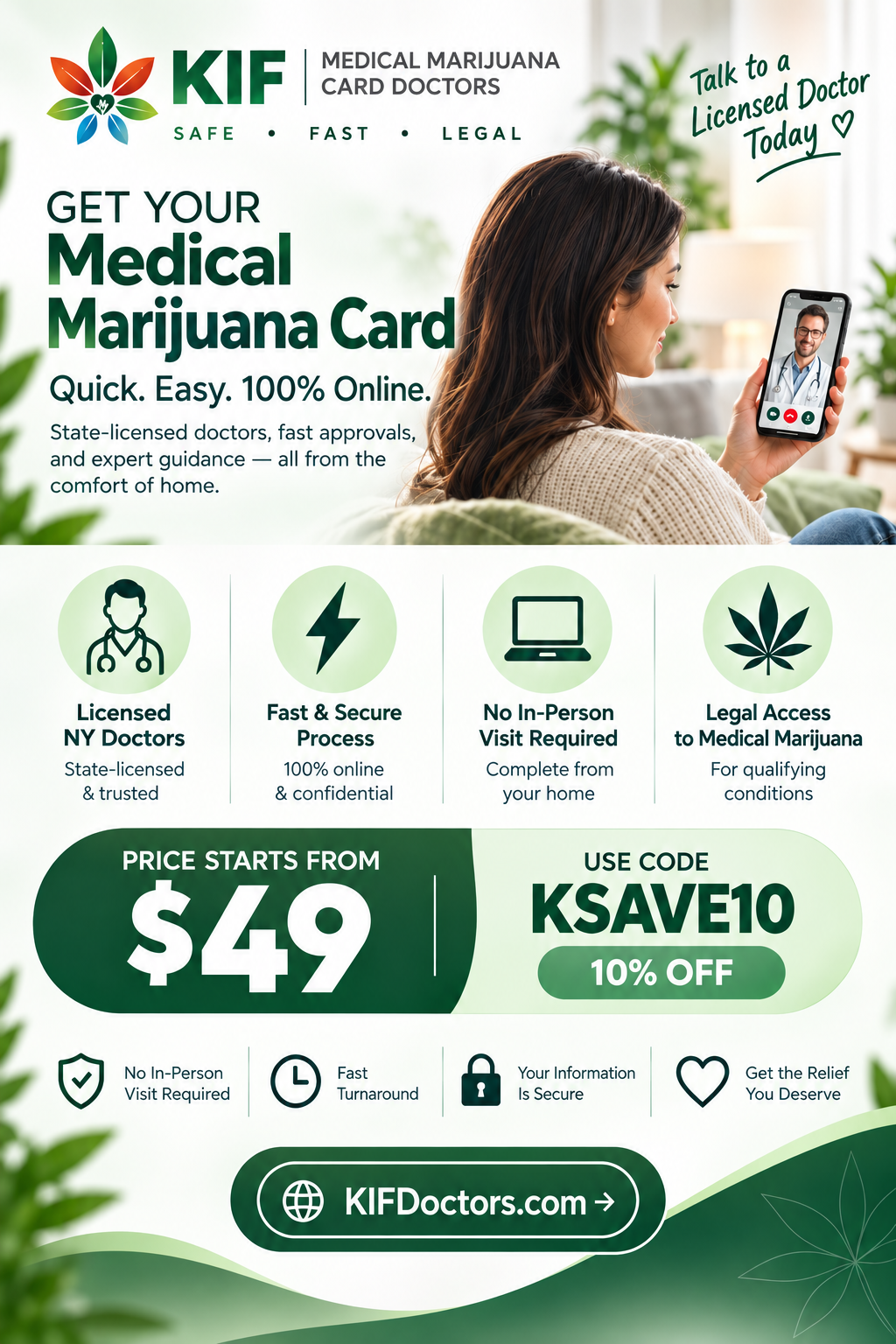
If you want a telehealth option, Same Day Medical Marijuana Card Online – Kif Doctors offers access to licensed physicians for same-day medical cannabis evaluations when clinically appropriate.
Quick Tips
- Use your legal name exactly as it appears on your ID.
- Prepare a medication list before the appointment, including supplements and sleep aids.
- Be clear about your main symptom goal, such as fewer pain flares or better appetite.
- Ask whether THC, CBD, or a balanced product makes the most sense for your situation.
- Do not drive, work with machinery, or perform safety-sensitive tasks while impaired.
- Store cannabis in child-resistant packaging and away from children, pets, and visitors.
Why some patients are approved quickly while others need more review
Approval speed depends on the clarity of the medical picture. A patient with a documented history of cancer-related nausea, severe neuropathy, or long-term chronic pain may be certified quickly if there are no major safety concerns. A patient with limited records, unclear symptoms, heavy alcohol use, unstable psychiatric symptoms, or complex medication interactions may need a more cautious review.
This is not meant to create barriers. It is basic clinical responsibility. Cannabis can be helpful for some patients, but it can also cause dizziness, sedation, anxiety, paranoia, impaired coordination, rapid heart rate, and interactions with other sedating substances. People with a personal or family history of psychosis, uncontrolled bipolar disorder, pregnancy, certain heart conditions, or a history of cannabis use disorder should have a careful discussion before using THC-dominant products.
Medical cannabis also differs from adult-use cannabis in purpose and oversight. Adult-use products are purchased for general legal use by adults who meet age requirements. Medical cannabis is tied to a clinician’s recommendation and a patient’s health condition. The implication is important: medical patients may receive more targeted guidance, may have access to medical dispensary staff familiar with patient needs, and may be better positioned to discuss cannabis use with other healthcare providers.
Another reason approval can vary is the difference between diagnosis and function. A diagnosis names the condition. Function explains how it affects your life. In an evaluation, it is helpful to say more than, I have pain. A clearer description is: I have lower back pain that flares after standing for 20 minutes, wakes me twice a night, and has not improved enough with physical therapy and non-opioid medication. That kind of detail helps the clinician judge whether a medical cannabis card is appropriate.
Telehealth has also changed access. Patients who once had to travel across the state can now often speak with a medical marijuana doctor from home. That matters for people with limited transportation, immune system concerns, caregiving responsibilities, or severe symptoms. The tradeoff is that patients should be more careful about choosing a legitimate provider. A trustworthy clinician will discuss benefits and risks, not just payment and approval.
| What to prepare | Why it matters |
| Photo ID | Dispensaries need to confirm identity when you use your certification. |
| Medication list | Helps the practitioner identify sedation risks and possible interactions. |
| Symptom timeline | Shows duration, severity, triggers, and treatment history. |
| Prior records | Supports the diagnosis and reduces delays if the case is complex. |
| Questions for the clinician | Helps you leave with a practical plan, not just a document. |
Using your medical cannabis certification wisely after approval
Getting approved is only the beginning. The most common mistake new patients make is focusing on the cannabis card and not the treatment plan. Medical cannabis works best when used deliberately: the right product, the right dose, the right time, and a realistic goal.
New York medical dispensaries may offer several product forms, including tinctures, capsules, tablets, oral sprays, vaporization products, topicals, and whole flower where available under program rules. Each form behaves differently. Inhaled products usually act faster but wear off sooner. Oral products take longer to work and can feel stronger or last longer, especially if the dose is too high. Tinctures can be easier to titrate because patients can start with a small measured amount.
For many patients, the safest approach is to start low and increase slowly. A low-dose THC product may be enough for sleep or pain in someone who is cannabis-sensitive. Others may prefer CBD-dominant or balanced THC:CBD products to reduce intoxication. CBD is not intoxicating in the same way THC is, but it can still interact with certain medications, including some seizure medications and blood thinners. This is why an honest medication review matters.
Patients should also think about timing. A product used at night for sleep may be inappropriate before driving to work. A product that helps severe evening pain may cause morning grogginess if taken too late. In practice, small adjustments often make the difference between a helpful regimen and an unpleasant experience.
There are also legal and workplace implications. A New York medical card does not mean you can use cannabis anywhere, bring it across state lines, or be impaired at work. Federal law still treats cannabis differently from New York law. Employers may have safety policies, especially for transportation, healthcare, construction, and other regulated roles. If your job involves drug testing or safety-sensitive duties, consider speaking with a qualified employment professional or your human resources department before using THC products.
Pros and cons of getting a medical cannabis card in New York
- Pros: clinical guidance, access to medical dispensaries, documentation of patient status, caregiver options, and a more structured approach to product selection.
- Pros: telehealth can make approval more convenient for patients who have difficulty traveling.
- Cons: approval still requires a clinician’s judgment and may not be appropriate for every patient.
- Cons: THC can impair driving, work performance, balance, memory, and anxiety control in some people.
- Cons: cannabis remains federally illegal, which can affect travel, housing, firearms issues, and certain employment situations.
A medical cannabis certification should be treated like the start of a treatment plan, not a permission slip to use as much cannabis as possible.
Common questions patients ask before applying
Do I still need a physical medical marijuana card in New York?
Most patients use a medical cannabis certification with a registry ID rather than relying on a traditional plastic card. Bring the certification and a government-issued photo ID to a licensed medical dispensary. Because procedures can change, check state guidance or ask your practitioner if you are unsure what your dispensary requires.
What conditions qualify for a medical cannabis card?
New York uses a practitioner-discretion model. That means the clinician evaluates whether your condition may benefit from medical cannabis instead of simply checking a rigid list. Chronic pain, neuropathy, cancer-related symptoms, PTSD-related symptoms, severe nausea, appetite issues, spasms, and other significant symptoms may be discussed, but approval depends on your full clinical picture.
Can I get approved online?
Yes, many evaluations can be completed through telehealth when appropriate. You should still expect a real medical review. Be cautious with any service that guarantees approval without asking about your health history, current medications, or risks.
How long does approval take?
Some patients receive certification the same day after a completed evaluation. Others may need to provide records or clarify medical history. Delays are more likely when symptoms are poorly documented, the patient has complex risks, or identity information does not match official records.
Can minors qualify?
Minors may be eligible through New York’s medical cannabis program, but they need appropriate involvement from a parent, guardian, or designated caregiver. Pediatric use should be handled carefully and usually requires more detailed clinical oversight.
Can I grow cannabis if I am a certified patient?
New York allows certain certified patients and designated caregivers to cultivate cannabis within program rules and limits. Home cultivation rules are specific, including plant limits and secure storage expectations, so patients should confirm the details before growing.
Will my regular doctor know?
Your medical cannabis practitioner may not automatically coordinate with your primary care doctor unless you request it or sign appropriate releases. Still, it is usually wise to tell your regular clinician, especially if you take sedatives, blood thinners, seizure medications, psychiatric medications, or heart medications.
What if I am denied?
A denial does not always mean cannabis could never be appropriate. It may mean the clinician needs more records, sees a safety concern, or believes another treatment should be addressed first. Ask for the reason and whether follow-up is possible after additional documentation or medical stabilization.
Conclusion
Getting approved for a New York medical marijuana card is more accessible than many patients expect, but it is still a medical process. The state’s modern program gives practitioners flexibility to certify patients whose conditions may benefit from cannabis, which is helpful for people who do not fit neatly into old qualifying lists. At the same time, that flexibility places more responsibility on the clinician and the patient to make thoughtful decisions.
The best way to improve your chances is to approach the appointment prepared. Know your symptoms, gather relevant records, list your medications, and be honest about your goals and risks. After approval, use your medical cannabis card or certification carefully: start low, track your response, avoid impairment-related risks, and keep communication open with healthcare professionals.
Medical cannabis is not a cure-all, and it is not the right choice for everyone. For the right patient, however, a well-managed medical cannabis plan can be a practical part of symptom control, especially when it is guided by a qualified practitioner and used with respect for safety, law, and personal health.
Sources
- Medical Cannabis | Office of Cannabis Management (cannabis.ny.gov)
- Patients | Office of Cannabis Management (cannabis.ny.gov)
- Healthcare Providers | Office of Cannabis Management (cannabis.ny.gov)