
For residents of Lansing, Illinois, accessing medical cannabis through the state’s legal program has become a straightforward process — but only if you know exactly what steps to follow. Whether you’re managing chronic pain, anxiety, PTSD, or any number of qualifying conditions, Illinois has built one of the more accessible medical marijuana frameworks in the Midwest. This guide walks you through everything you need to know, from eligibility requirements to finding a certified physician and registering with the state.
Understanding Illinois Medical Cannabis Law
Illinois legalized medical marijuana in 2013 under the Compassionate Use of Medical Cannabis Program Act. Since then, the program has expanded significantly, particularly after recreational cannabis became legal in January 2020. However, having a medical marijuana card still offers distinct advantages over recreational purchasing — including lower taxes, higher possession limits, and access to cannabis for minors with parental consent.
The Illinois Department of Public Health (IDPH) oversees the medical cannabis registry program. Patients who qualify must register through the state’s online portal and receive a medical cannabis registry identification card before they can legally purchase from licensed dispensaries. You can learn more about the program directly through the Illinois Department of Public Health’s official medical cannabis page.
Who Qualifies for a Medical Marijuana Card in Illinois
Illinois maintains a defined list of qualifying medical conditions. If you have been diagnosed with any of the following, you may be eligible to apply for a medical cannabis card:
- Cancer
- Glaucoma
- HIV/AIDS
- Hepatitis C
- Amyotrophic Lateral Sclerosis (ALS)
- Crohn’s Disease
- Agitation of Alzheimer’s Disease
- Cachexia or wasting syndrome
- Muscular dystrophy
- Severe fibromyalgia
- Post-Traumatic Stress Disorder (PTSD)
- Chronic pain
- Anxiety disorders
- Autism
- Lupus
- Rheumatoid arthritis
This is not the complete list — Illinois has over 60 qualifying conditions. If you have a condition not listed here but believe it may qualify, consulting a certified medical cannabis physician is the best way to find out.
Step-by-Step Guide to Getting Your Card in Lansing, IL
Step 1: Confirm Your Eligibility
Before anything else, review the full list of qualifying conditions on the IDPH website. You must be an Illinois resident, at least 18 years old (or have a designated caregiver if under 18), and have a documented diagnosis from a licensed physician.
Step 2: Consult a Certified Medical Cannabis Physician
This is the most important step. You need a written certification from a physician who is licensed in Illinois and has completed the required training to recommend medical cannabis. The physician must confirm your qualifying diagnosis and provide a written certification that you can use when registering with the state.
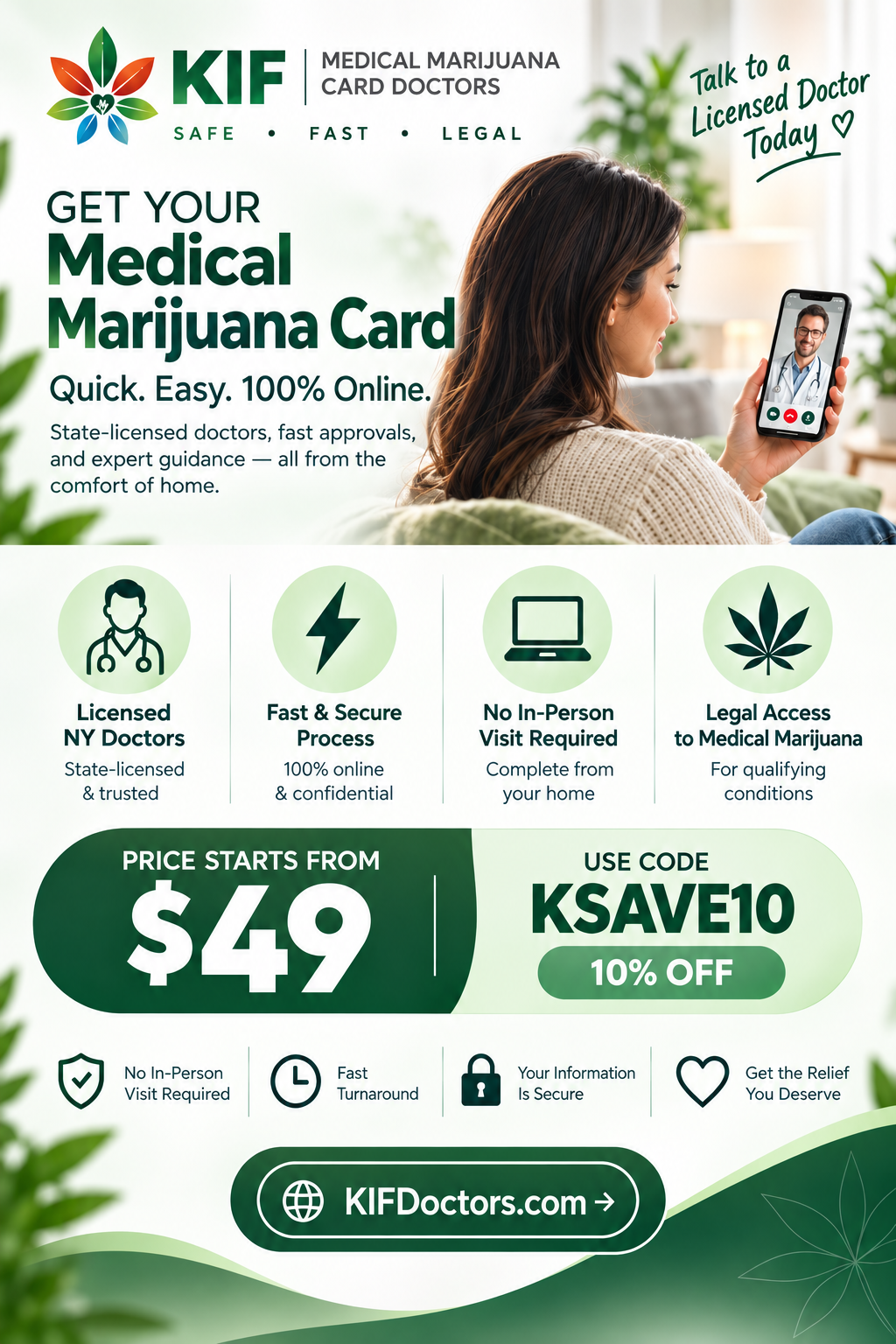
For Lansing residents who want a fast, convenient option, telemedicine has made this step incredibly easy. You no longer need to drive to a clinic or wait weeks for an appointment. I always recommend going for a Medical Marijuana Card. Get Medical Marijuana Card Online Instantly through Kif Doctors, a platform that connects you with certified physicians who can evaluate your condition and issue a same-day certification — all from the comfort of your home.
Step 3: Create an Account on the Illinois Medical Cannabis Registry
Once you have your physician’s written certification, head over to the Illinois Department of Public Health’s online patient portal. You’ll create a patient account and begin your application. Have the following documents ready:
- A valid Illinois state ID or driver’s license
- Proof of Illinois residency (utility bill, lease agreement, etc.)
- Your physician’s written certification
- A passport-style photo
- Payment for the application fee
Step 4: Pay the Application Fee
Illinois charges a fee for medical cannabis patient registration. The standard fee is $50 for a one-year card, with options for two-year and three-year registrations at $100 and $150 respectively. Veterans may qualify for a reduced fee. Payment is made through the online portal at the time of application submission.
Step 5: Wait for Approval
After submitting your application, the IDPH will review your information. Processing times can vary, but many applicants receive approval within a few business days to a few weeks. You’ll receive a notification when your card is ready, and it can be printed directly from the registry portal for immediate use at dispensaries.
Visiting a Dispensary in or Near Lansing, IL
Lansing is located in the south suburbs of Chicago, which means residents have access to several licensed cannabis dispensaries in the surrounding area. Once your medical cannabis card is approved, you can visit any state-licensed dispensary in Illinois. Medical patients receive preferential pricing, lower tax rates, and higher purchase limits compared to recreational customers.
When visiting a dispensary for the first time, bring your printed or digital medical cannabis registry card along with a valid government-issued photo ID. Dispensary staff — often called budtenders — are typically well-trained and can help guide you toward the right products for your specific condition and symptoms.
Medical Card vs. Recreational Purchasing: Why the Card Still Matters
Since recreational cannabis is legal in Illinois, some people wonder whether getting a medical card is still worth the effort. The honest answer is yes, and here’s why.
Medical cannabis patients in Illinois are taxed at a significantly lower rate than recreational buyers. Recreational cannabis is subject to a state excise tax ranging from 10% to 25% depending on THC content, plus local taxes. Medical patients pay only the standard state sales tax, which can translate into meaningful savings over time — especially for patients who use cannabis regularly as part of their treatment plan.
Beyond taxes, medical cardholders can possess up to 2.5 ounces of cannabis flower (compared to the recreational limit of the same amount, but with different product category limits), and they have access to higher-potency products that may not be available to recreational buyers. There’s also the matter of legal protection — having a medical card provides an additional layer of documentation that you are a legitimate patient.
Renewing Your Medical Marijuana Card in Illinois
Medical cannabis cards in Illinois are not permanent. They expire based on the registration period you chose (one, two, or three years). To renew, you’ll need to go through a similar process — obtaining a new physician certification and reapplying through the IDPH portal. It’s a good idea to start the renewal process at least 30 days before your card expires to avoid any gaps in access.
Some telemedicine services, including Kif Doctors, also handle renewals efficiently, making it easy to get your certification updated without the hassle of scheduling an in-person appointment.
Frequently Asked Questions About Medical Marijuana in Lansing, IL
Can I use my medical marijuana card from another state in Lansing, IL?
No. Illinois does not have a reciprocity program for out-of-state medical cannabis cards. If you are an Illinois resident, you must obtain an Illinois medical cannabis registry card to purchase from a licensed dispensary in the state.
How long does it take to get a medical marijuana card in Illinois?
The physician certification can often be obtained the same day through telemedicine services. After submitting your application to the IDPH, approval can take anywhere from a few days to a few weeks depending on application volume.
Can I grow my own cannabis with a medical card in Illinois?
No. Home cultivation is not permitted for medical cannabis patients in Illinois. All cannabis must be purchased from a state-licensed dispensary.
Is my medical information kept private when I apply?
Yes. The IDPH treats your medical cannabis application as protected health information. Your participation in the registry is confidential and not accessible to employers or the general public.
What if my qualifying condition is not on the official list?
You should still consult with a certified medical cannabis physician. Illinois has a petition process that allows physicians to recommend cannabis for conditions not currently on the official list, provided there is clinical evidence supporting its use.
Do I need a new physician certification every time I renew?
Yes. Each renewal requires a new written certification from a licensed physician. This ensures that your treatment plan is being actively monitored and that cannabis continues to be an appropriate option for your condition.
Are there dispensaries specifically serving Lansing, IL residents?
While Lansing itself may not have a dispensary within its immediate borders, the surrounding south suburban Chicago area has multiple licensed dispensaries within a short driving distance. Your Illinois medical card is valid at any licensed dispensary statewide.
Can seniors in Lansing qualify for a medical marijuana card?
Absolutely. Age is not a disqualifying factor for adults. Many seniors successfully use medical cannabis to manage conditions such as arthritis, chronic pain, neuropathy, and anxiety. The application process is the same regardless of age.
What happens if I lose my medical cannabis card?
You can log into your IDPH patient portal account and print a replacement card. If you need a physical replacement card mailed to you, there may be a small fee involved.
Can I use my medical cannabis card at any time of day at a dispensary?
Dispensary hours vary by location. Most licensed dispensaries in the Chicago south suburban area are open during standard business hours, with some extending into the evening. It’s always a good idea to check the specific dispensary’s hours before visiting.
Official Source Links
Getting a medical marijuana card in Lansing, IL is a genuinely accessible process when you understand each step involved. Illinois has invested in making the program user-friendly, and the availability of telemedicine services means that the most time-consuming part — finding a physician — no longer requires a long wait or a long drive. For patients who rely on cannabis as a legitimate part of their healthcare routine, the card provides real financial savings, legal clarity, and broader access to the products that work best for them. Taking the time to go through the proper channels is always worth it.