
New York City has become one of the more accessible places in the country to obtain a medical marijuana card, thanks to a streamlined certification process and a growing network of licensed healthcare providers. Whether you are managing chronic pain, anxiety, PTSD, or any number of qualifying conditions, getting certified for medical cannabis in NYC is a straightforward process when you know the steps. This guide walks you through everything you need to know, from checking your eligibility to walking out with your certification in hand.
What You Will Accomplish
By the end of this guide, you will understand the full process of obtaining a medical marijuana card in New York City. You will know which conditions qualify, what documents to prepare, how to find a certified healthcare provider, and how to register with the state. This matters because having a medical marijuana card gives you legal access to cannabis products at licensed dispensaries, often at lower prices than the recreational market, and with a wider range of medical-grade options tailored to specific health needs.
Requirements and Eligibility
Before diving into the steps, it is important to understand who qualifies. New York State has a relatively open medical cannabis program. Since 2023, New York no longer requires patients to have a specific condition from a fixed list. Instead, any licensed healthcare practitioner can certify a patient if they determine that medical cannabis may benefit that individual’s health condition. This is a significant change from the earlier, more restrictive system.
Here is what you will generally need to be eligible:
- You must be a resident of New York State
- You must be 18 years of age or older (minors can participate with a designated caregiver who is at least 21)
- You must have a bona fide patient-practitioner relationship with a certified healthcare provider
- You must have a qualifying health condition that the provider believes would benefit from medical cannabis
Common conditions that practitioners frequently certify include chronic pain, cancer, HIV/AIDS, ALS, Parkinson’s disease, multiple sclerosis, spinal cord damage, epilepsy, inflammatory bowel disease, neuropathy, PTSD, and anxiety disorders, among others. Because the state has moved away from a rigid list, the decision largely rests with your healthcare provider.
Step 1: Gather Your Documents and Medical Records
Start by collecting the documentation you will need before your appointment. Having these ready saves time and helps the practitioner make a well-informed recommendation.
- A valid, government-issued photo ID such as a New York driver’s license, state ID, or passport
- Proof of New York State residency if your ID does not reflect a current address (a utility bill or lease agreement works)
- Medical records related to your condition, including diagnoses, treatment history, and any relevant test results
- A list of current medications you are taking
Pro tip: You do not need a referral from your primary care doctor to see a medical cannabis practitioner. However, bringing recent medical records significantly strengthens your case and helps the provider understand your health history more thoroughly.
Step 2: Find a Certified Healthcare Practitioner in NYC
Not every doctor in New York is authorized to certify patients for medical cannabis. You need to see a practitioner who is registered with the New York State Office of Cannabis Management (OCM). These can be physicians, nurse practitioners, or physician assistants who have completed the required training.
There are a few ways to find one:
- Visit the New York State Office of Cannabis Management website for guidance on the program and registered practitioners
- Search telehealth platforms that specialize in medical cannabis evaluations
- Ask your primary care physician if they are registered or if they can refer you to someone who is
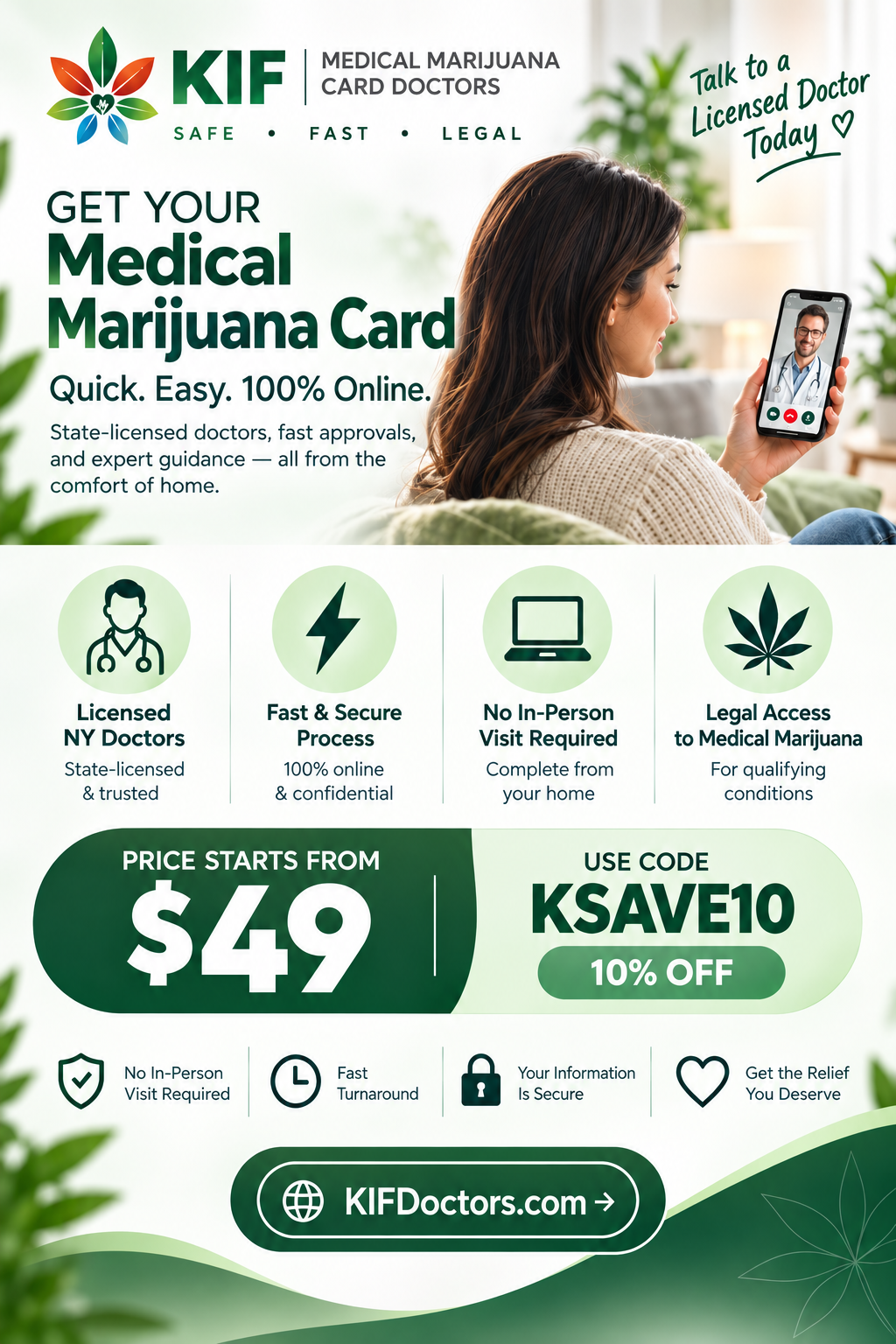
Telehealth has made this step considerably easier. Many NYC patients now complete their entire evaluation online from home. Platforms like Kif Doctors offer same-day appointments with certified practitioners, making the process faster than scheduling an in-person visit. If you want to skip the waiting room entirely, you can Get Medical Marijuana Card Online Instantly through their platform.
Warning: Be cautious of any service that guarantees approval before you have even spoken to a practitioner. Legitimate certifications require a real consultation. Any platform skipping that step is operating outside legal guidelines.
Step 3: Complete Your Medical Evaluation
Your appointment with a certified practitioner is the core of the entire process. This is where the provider reviews your condition, medical history, and determines whether medical cannabis is an appropriate option for you.
During the evaluation, expect the following:
- A review of your medical history and current symptoms
- A discussion about your health goals and what you hope to achieve with medical cannabis
- Questions about any previous cannabis use, if applicable
- An explanation of different product types and consumption methods available in New York dispensaries
If the practitioner determines you are a good candidate, they will issue a certification. In New York, this certification is entered directly into the state’s Medical Cannabis Data Management System (MCDS). You do not receive a physical card at this stage — that comes next.
Pro tip: Be honest during your evaluation. Practitioners are there to help you, not judge you. The more clearly you communicate your symptoms and how they affect your daily life, the better equipped the provider is to make the right recommendation.
Step 4: Register with the New York State Office of Cannabis Management
Once your practitioner submits your certification, you need to register as a patient with the New York State Office of Cannabis Management. This is done through the state’s online patient registry.
Here is how to complete your registration:
- Go to the NY Office of Cannabis Management website
- Navigate to the patient registration portal
- Create an account using your name, date of birth, and contact information
- Enter the certification ID provided by your practitioner
- Pay the registration fee if applicable (New York has waived or reduced fees for certain low-income patients)
- Submit your application and wait for your registry ID to be issued
Once registered, you will receive a registry ID number. This number, along with a valid photo ID, is what you will use to purchase medical cannabis at a licensed dispensary in New York City. Some patients also receive a physical card, though the registry ID itself is sufficient.
Common mistake to avoid: Do not wait too long between your certification and registration. Certifications are valid for a specific period, and delaying registration means you could end up needing a new appointment.
Step 5: Visit a Licensed Dispensary in New York City
With your registry ID in hand, you are now legally permitted to purchase medical cannabis from any licensed dispensary in New York State. New York City has a growing number of dispensaries, and many of them have knowledgeable staff, called budtenders, who can help guide you toward the right products for your condition.
What to bring to the dispensary:
- Your New York State registry ID number
- A valid government-issued photo ID
Medical cannabis products available in New York include flower, oils, tinctures, capsules, vaporizable products, and topicals. The right product for you depends on your condition, lifestyle, and how quickly you need relief. Dispensary staff are trained to help you navigate these choices.
Pro tip: Medical patients often receive priority service at dispensaries, and some locations offer lower prices on medical-grade products compared to recreational options. It is worth asking about any patient discount programs when you visit.
Step 6: Renew Your Medical Marijuana Certification
Medical cannabis certifications in New York are not permanent. They are typically valid for one year, after which you will need to see your certified practitioner again to renew. Staying on top of your renewal ensures you never experience a gap in access.
Renewal tips:
- Set a reminder a month before your certification expires
- Keep notes on how cannabis has affected your condition so you can share this with your practitioner at renewal
- Telehealth renewals are usually faster and more convenient than in-person visits
Frequently Asked Questions About Medical Marijuana in New York City
Do I still need a medical card if recreational cannabis is legal in New York?
Yes, having a medical card is still worth it. Medical patients often pay lower taxes on their purchases, have access to higher-potency products, and can buy larger quantities than recreational customers. The certification process is a small investment that pays off over time.
How long does it take to get a medical marijuana card in NYC?
With telehealth options, many patients receive their certification the same day. Registration with the state typically takes a day or two. In total, most people can be fully registered within 48 to 72 hours of starting the process.
Can I use my medical marijuana card in other states?
New York does not have formal reciprocity agreements with other states. Some states do honor out-of-state medical cards, but you should check the specific laws of any state you plan to visit before assuming your card will be accepted there.
Is my medical information kept private?
Yes. The New York State patient registry is confidential. Your information is protected under state law and cannot be shared with law enforcement agencies for the purpose of prosecution.
What if my doctor is not registered with the OCM?
If your primary care physician is not registered, you can still get certified by seeking out a practitioner who specializes in medical cannabis evaluations. Telehealth platforms make this very accessible without requiring you to switch doctors.
Can I grow my own cannabis with a medical card in New York?
As of current New York law, adults 21 and older are permitted to cultivate up to six plants at home for personal use, regardless of medical status. However, specific rules apply, so it is worth reviewing the latest guidelines from the Office of Cannabis Management.
Are there dispensaries in all five boroughs of NYC?
Yes. Licensed dispensaries operate across Manhattan, Brooklyn, Queens, the Bronx, and Staten Island. The number of locations continues to grow as the state expands its cannabis retail licensing program.
What does a medical cannabis evaluation typically cost?
Consultation fees vary by provider but generally range from $75 to $200. Many telehealth platforms offer competitive pricing and some have money-back guarantees if you are not approved.
Can I be denied a medical marijuana certification?
Yes. A practitioner may decline to certify you if they do not believe medical cannabis is appropriate for your condition or if they feel they do not have enough information to make a responsible recommendation. Bringing thorough medical records reduces this risk significantly.
Do I need a caregiver designation if I have mobility issues?
New York allows patients to designate a caregiver who can purchase and administer medical cannabis on their behalf. Caregivers must register with the state and meet age and background requirements.
Conclusion
Getting a medical marijuana card in New York City is a manageable, well-defined process. With the state’s expanded eligibility criteria and the availability of same-day telehealth consultations, there has never been a more accessible time to explore medical cannabis as part of your healthcare routine. The key is to approach it the same way you would any other medical decision, with honest communication, proper documentation, and a clear understanding of your goals. Once you are registered, you gain access to a regulated, quality-controlled supply of cannabis products designed to support real health outcomes.
Official Sources:
- New York State Office of Cannabis Management
- New York State Department of Health – Medical Marijuana Program